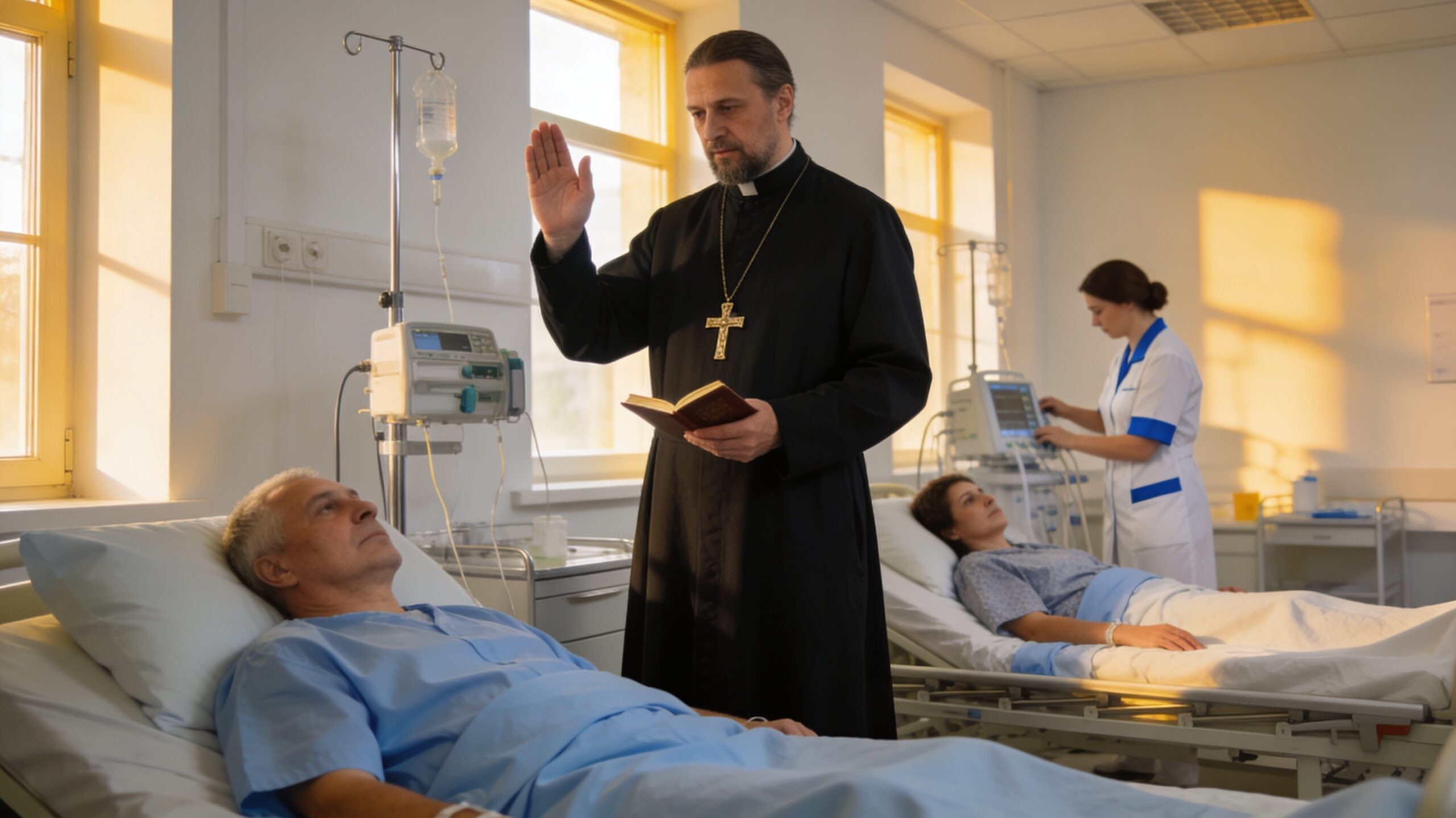
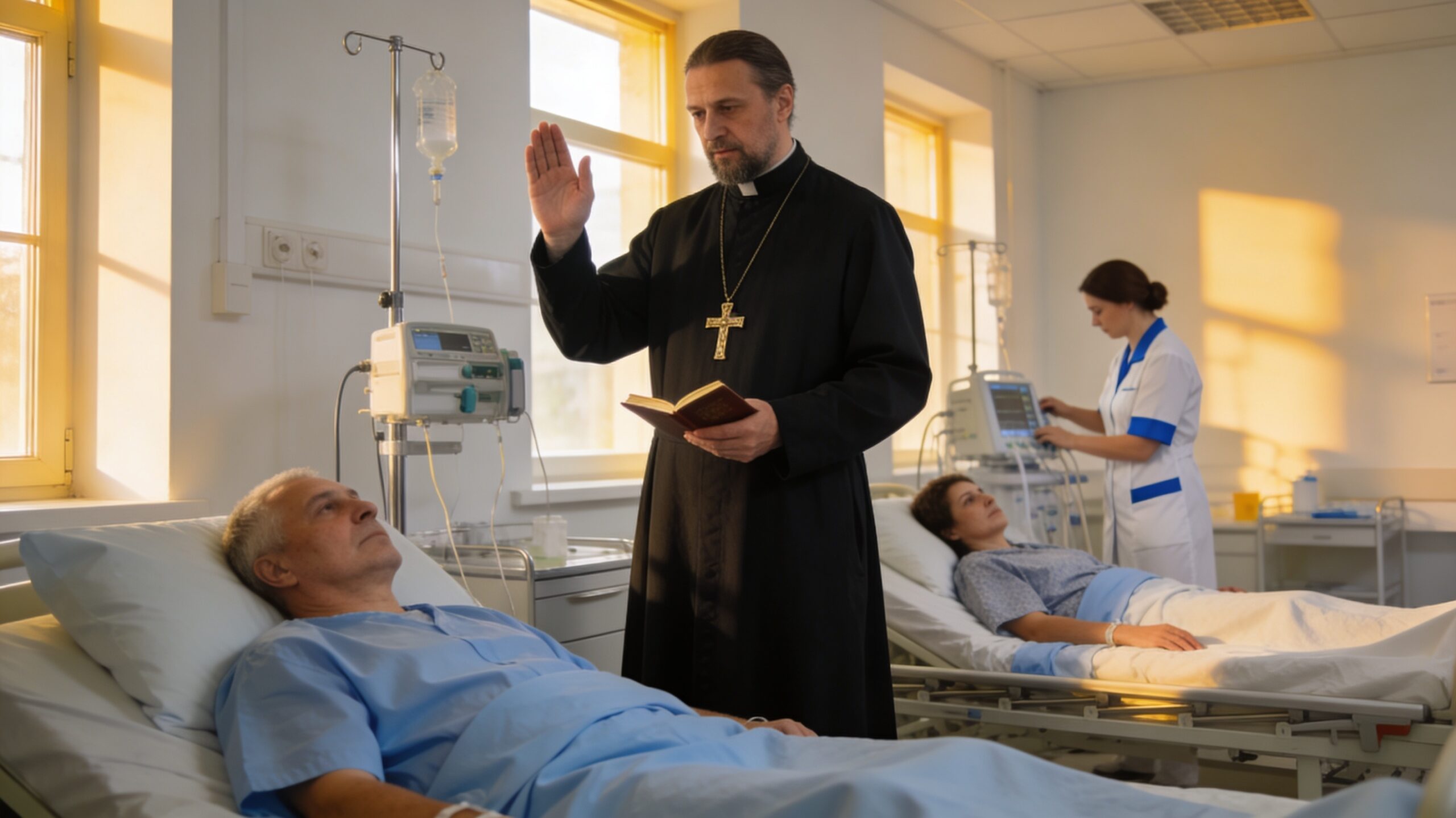
On Sunday, when we listen to the Gospel of the paralytic and at the same time celebrate the Day of the Sick in Ukraine, the Church turns its gaze with special attention and love to all who suffer. In times of difficult trials for our people, when the Fatherland is going through a cruel war, when wounds multiply every day, both physical and spiritual, we are called to see the face of the suffering Christ in every wounded and sick person in a special way. In His wounds is our healing, in His cross is our hope, in His resurrection is our life.
Today, together with our entire Church, we lay before the Lord the painful wounds of our defenders - soldiers who were wounded at the front, lost their health, limbs, the ability to see or hear. Their bodies are marked by the scars of war, and their hearts are often marked by invisible pain, trauma, anxiety, fear, and nightmares. Next to them are wounded and sick civilians: adults and children, the elderly, victims of shelling, those who have lost their homes, loved ones, and a roof over their heads and are now fighting not only for their lives but also for the preservation of human dignity.
The Church looks at our children with particular pain today. They often have no visible physical wounds, but their hearts are marked by deep traces of war: the fear of air raids, the experience of hiding in basements and bomb shelters, separation from their parents, forced emigration, and difficult memories that are difficult to express in words. Their pain is silent, but extremely deep, and we have no right to leave it without attention and care.
Let us not forget the multitude of morally and spiritually wounded people: those who have lost the meaning of life, are experiencing deep fatigue and disappointment, cannot forgive, live in constant fear or despair. Wounds of the soul are no less painful than wounds of the body. It is to these people that the Church today wants to speak words of comfort and mercy, to be close to everyone, following the example of the Good Samaritan, who does not pass by the wounded, but stops and bandages their wounds, supports and accompanies them.
On this Day of the Sick, we call on all our parishes, communities and families to a special prayer and effective mercy:
- let us pray at the Divine Liturgy, in the family circle and personally for wounded soldiers, sick civilians, children and all who suffer;
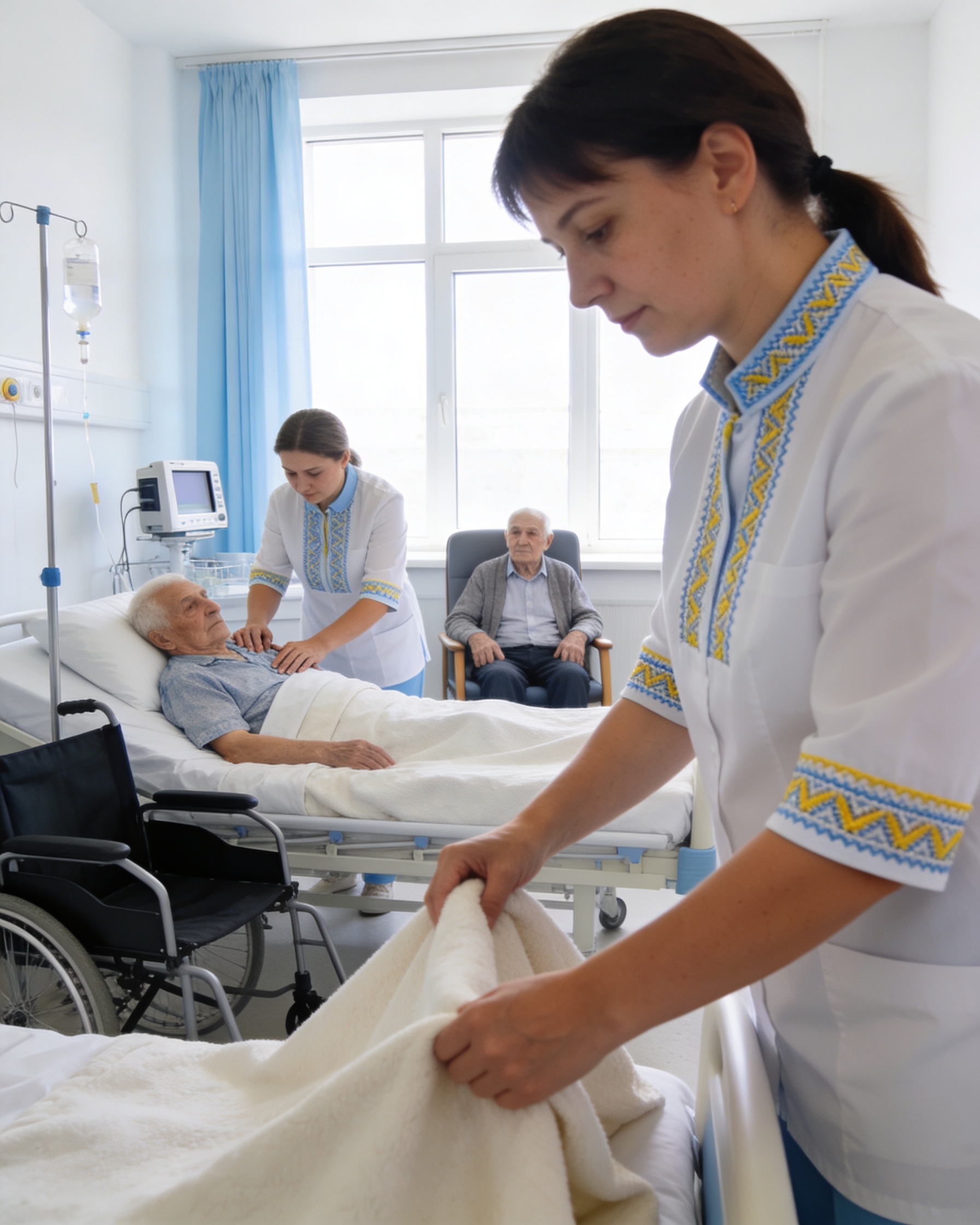
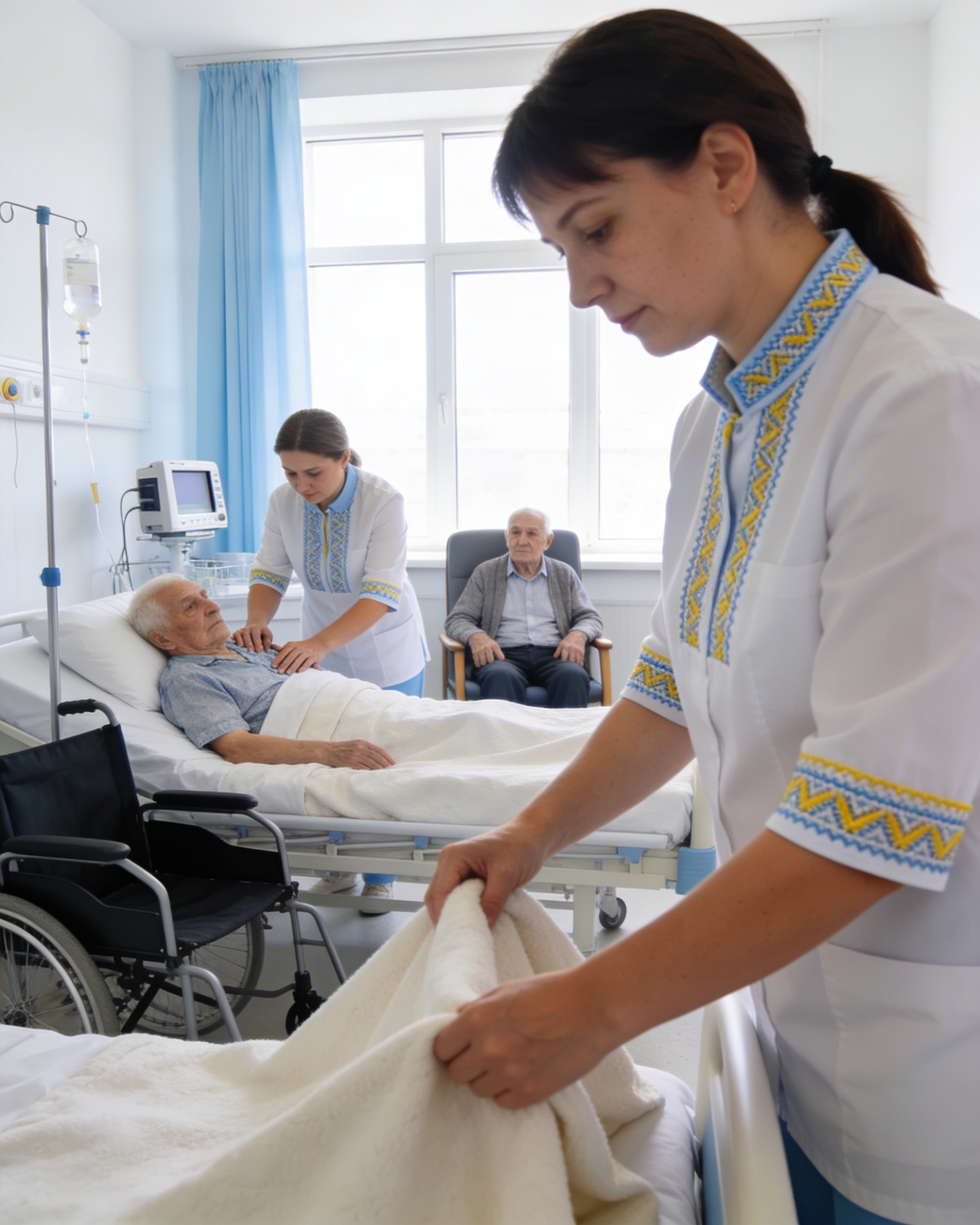
- let us remember in prayer doctors, nurses, chaplains, psychologists, volunteers and all who serve at the bedside of the sick or wounded;
- let us visit, if possible, those who are in hospitals, military hospitals, rehabilitation centres or who are suffering alone at home;
- let us support with a kind word, attention, comfort, telephone call, volunteer or material help those who bear the heavy cross of illness or injury;
- let us ask the Lord for the grace of healing – physical, psychological and spiritual – for each wounded person and for our people as a whole.
As Pope Leo XIV noted in his address for the World Day of the Sick, “the true remedy for humanity’s wounds is a style of life based on fraternal love, which has its root in love of God.”[16] I genuinely hope that our Christian lifestyle will always reflect this fraternal, “Samaritan” spirit – one that is welcoming, courageous, committed and supportive, rooted in our union with God and our faith in Jesus Christ.”(3). Enkindled by this divine love, we will surely be able to give of ourselves for the good of all who suffer, especially our brothers and sisters who are sick, elderly or afflicted.
Dearly beloved in Christ, let us remember: for the sick or wounded, sometimes a single sincere word, a smile, or a simple presence nearby becomes a sign of God’s love. Our service to the sick person cannot do without constant empathy for suffering, without kindness and gentleness, forgiveness, and solidarity. Only continued care and unwavering help can restore to the sick person God’s most precious gift—the awareness of his or her dignity in God’s eyes.
Let us remember that the Word of God, revealed in Holy Scripture, should become for us an example and a source of inspiration for serving the sick. In every dressing, in every act of mercy performed for the suffering, we touch Christ himself, who said: “I was sick and you visited me” (Mt 25:36).
Let us help the sick to understand that the state of illness, even if it is long, can become our treasure of spiritual experience. We are called to live our sufferings and pains in complete union through faith with our suffering Savior. He took upon himself the pains and sufferings of every person and is present in our sufferings. After all, it was in this way that Jesus Christ, the incarnate only-begotten Son of God, fulfilled the will of His Heavenly Father and returned us to Him. By humbly accepting illness, a person joins in Christ’s sufferings; one’s suffering can also be salvific for oneself and for others. In the example of Jesus Christ, we see that human weakness becomes an opportunity to do good, to take on and help bear the burden of the suffering of our neighbours, as did the Savior, who took on the burden of our sins.
Today, looking at the crucified but risen Lord, let us entrust to Him all our wounds – personal and national. May His grace touch every wounded soul, give strength to those who heal and serve, and bring closer the day of just peace for Ukraine.
May the Most Holy Theotokos, the Oranta of our people, cover with her mantle all the wounded, sick, infirm, suffering and their families. May Saint John Paul II, who established the Day of the Sick, and all the saints of the Ukrainian land ask the Lord for the gift of healing, fortitude, hope and comfort for our people.
I fervently wish that this day will become for each of us a reminder of the power of love, compassion and mutual support. Let us be close to each other, let us bear the burdens of our neighbours, let us not lose hope and believe: even in this dark time the Lord leads us to life.
With a prayer for every wounded, sick and weary in our people
+SVIATOSLAV
Given in Kyiv,
at the Patriarchal Cathedral of the Resurrection of Christ,
on the day of the Holy, glorious great martyr, victor and miracle worker George,
April 23, 2026 of the year of God
_________________________________________
We instruct the pastors to read this Address to the faithful after each Divine Liturgy on the Sunday of the Paralytic, May 3 [April 26] of this year.
And during each Divine Liturgy in the special litany to add the following petitions:
We also pray to the Lord our God for all the sick, for the healing of their souls and bodies. Confirm, O Lord, their faith and strengthen them in hope, for You are the source of healing and the giver of all good.
We also pray for all medical workers and for those who, through their work, bring relief from suffering and pain to the infirm. Grant them, O Lord, Your grace, that their souls may always be filled with mercy, kindness and compassion for the sick, and that in their work they may always show deep respect for their dignity.
We also pray for all clergy and chaplains and for those who carry out voluntary service to the sick. Grant them, O Lord, Your grace, that in their service, Your love and Your mercy may become visible to all who bear the heavy cross of illness. Be to them, O Lord, a helper and giver of strength and inspiration for the accomplishment of works of mercy.
У неділю, коли слухаємо Євангеліє про розслабленого і водночас відзначаємо День хворого в Україні, Церква з особливою увагою й любов’ю звертає свій погляд до всіх, хто страждає. У час важких випробувань для нашого народу, коли Батьківщина проходить крізь жорстоку війну, коли щодня множаться рани, – тілесні й духовні, – ми покликані по-особливому побачити обличчя стражденного Христа в кожному пораненому і хворому. У Його ранах – наше зцілення, у Його хресті – наша надія, у Його воскресінні – наше життя.
Сьогодні разом з усією нашою Церквою складаємо перед Господом болючі рани наших захисників – військових, які зазнали поранень на фронті, втратили здоров’я, кінцівки, здатність бачити чи чути. Їхні тіла позначені шрамами війни, а серця – часто невидимим болем, травмами, тривогами, страхом і нічними кошмарами. Поруч із ними – поранені й хворі цивільні: дорослі й діти, люди похилого віку, постраждалі від обстрілів, ті, хто втратив домівку, близьких, дах над головою і тепер бореться не лише за життя, а й за збереження людської гідності.
Особливо болісно Церква сьогодні дивиться на наших дітей. Вони часто не мають видимих фізичних ран, але їхні серця позначені глибокими слідами війни: страхом повітряних тривог, досвідом переховування в підвалах і бомбосховищах, розлукою з батьками, вимушеною еміграцією, тяжкими спогадами, які важко висловити словами. Їхній біль тихий, але надзвичайно глибокий, і ми не маємо права залишити його без уваги й опіки.
Не забуваймо і про безліч морально й духовно зранених людей: тих, хто втратив сенс життя, переживає глибоку втому й розчарування, не може простити, живе в постійному страху чи відчаї. Рани душі не менш болючі, ніж рани тіла. Саме до цих людей Церква сьогодні хоче промовити слова втіхи й милосердя, бути поруч із кожним, за прикладом доброго самарянина, який не проходить повз пораненого, а зупиняється і перев’язує його рани, підтримує і супроводжує.
У цей День хворого закликаємо всі наші парафії, спільноти та родини до особливої молитви і дієвого милосердя:
- молімося на Божественній Літургії, у родинному колі й особисто за поранених військових, хворих цивільних, дітей та всіх, хто страждає;
- згадаймо в молитві лікарів, медсестер, капеланів, психологів, волонтерів та всіх, хто служить біля ложа хворого чи пораненого;
- відвідаймо, якщо це можливо, тих, хто перебуває в лікарні, військовому шпиталі, реабілітаційному центрі або самотньо страждає вдома;
- підтримаймо добрим словом, увагою, потіхою, телефонним дзвінком, волонтерською чи матеріальною допомогою тих, хто несе важкий хрест хвороби або поранення;
- просімо в Господа благодаті зцілення – тілесного, психологічного й духовного – для кожної зраненої особи та для нашого народу в цілому.
Як зазначив у своєму зверненні на Всесвітній день хворого Папа Лев ХIV, «справжні ліки від людських ран – це спосіб життя, заснований на братерській любові, вкорінений у любові до Бога. Я палко бажаю, щоб у нашому християнському способі життя ніколи не бракувало цього братнього виміру – інклюзивного, сміливого, жертовного й підтримуючого – який має своє найглибше коріння в нашому єднанні з Богом, у вірі в Ісуса Христа» (3). Запалені цією Божественною любов’ю, ми справді можемо присвятити себе благу всіх, хто страждає, особливо наших хворих, літніх та немічних братів і сестер.
Дорогі в Христі, пам’ятаймо: для хворого чи пораненого інколи одне щире слово, усмішка чи проста присутність поруч стають знаком Божої любові. Наше служіння хворій особі не може обійтися без постійного співпереживання страждань, без доброти й лагідності, прощення і солідарності. Лише тривала опіка та неухильна допомога можуть повернути хворій людині найцінніший Божий дар – усвідомлення своєї гідності в Божих очах.
Пам’ятаймо, що Слово Боже, об’явлене у Святому Письмі, повинно стати для нас прикладом і джерелом натхнення для служіння хворим. У кожній перев’язці, у кожному ділі милосердя, звершеному для стражденного, ми торкаємося самого Христа, який сказав: «Хворий [був], і ви навідались до Мене» (Мт. 25, 36).
Допомагаймо хворим зрозуміти, що стан недуги, навіть якщо він тривалий, може стати нашим скарбом духовного досвіду. Наші терпіння і болі ми покликані прожити у повному єднанні через віру із нашим страждаючим Спасителем. Він узяв на себе болі і страждання кожної людини і є присутній у наших стражданнях. Адже саме цією дорогою Ісус Христос, воплочений єдинородний Божий Син, виконав волю свого Небесного Отця і повернув нас до Нього. Смиренно приймаючи хворобу, людина долучається до Христових страждань; її терпіння також може бути спасенним для неї та для інших. На прикладі Ісуса Христа бачимо, що людська слабкість стає нагодою чинити добро, брати на себе й допомагати нести тягар терпіння ближніх, як це робив Спаситель, який узяв на себе тягар наших гріхів.
Сьогодні, дивлячись на розп’ятого, але воскреслого Господа, довірмо Йому всі наші рани – особисті й національні. Нехай Його благодать торкнеться кожної
зраненої душі, додасть сили тим, хто лікує і служить, та наблизить день справедливого миру для України.
Нехай Пресвята Богородиця, Оранта нашого народу, покриє своїм омофором усіх поранених, хворих, недужих, стражденних та їхні родини. Нехай святий Іван Павло ІІ, який установив День хворого, і всі святі української землі випросять у Господа для нашого народу дар зцілення, стійкості, надії й потіхи.
Палко бажаю, щоб цей день став для кожного з нас нагадуванням про силу любові, співчуття і взаємної підтримки. Будьмо поруч одне з одним, несімо тягарі ближніх, не втрачаймо надії і вірмо: навіть у цей темний час Господь веде нас до життя.
З молитвою за кожного зраненого, хворого та втомленого в нашому народі
+СВЯТОСЛАВ
Дано в Києві,
при Патріаршому соборі Воскресіння Христового,
у день Святого славного великомученика, переможця й чудотворця Юрія,
23 квітня 2026 року Божого
___________________________________________
Отцям-душпастирям доручаємо зачитати вірним це Звернення після кожної Божественної Літургії в неділю Розслабленого, 3 травня цього року.
А під час кожної Божественної Літургії в сугубій єктенії додати такі прохання:
Ще молимось Господеві Богу нашому за всіх хворих, за зцілення їхніх душ і тіл. Утверди, Господи, їхню віру й укріпи їх у надії, бо Ти є джерело оздоровлень і податель усякого добра.
Ще молимося за всіх медичних працівників і за тих, хто своєю працею приносить немічним полегшення страждань і болю. Подай, Господи, їм Свою благодать, щоб їхні душі були завжди сповнені милосердя, доброти і співчуття до хворих, а в праці вони завжди виявляли глибоку пошану до їхньої гідності.
Ще молимося за всіх священнослужителів-капеланів і за тих, хто здійснює волонтерське служіння хворим. Подай, Господи, Свою благодать, щоб у їхньому служінні стала видимою Твоя любов і Твоє милосердя до всіх, хто несе важкий хрест недуги. Будь їм, Господи, помічником і подателем сили та натхнення для звершення діл милосердя.
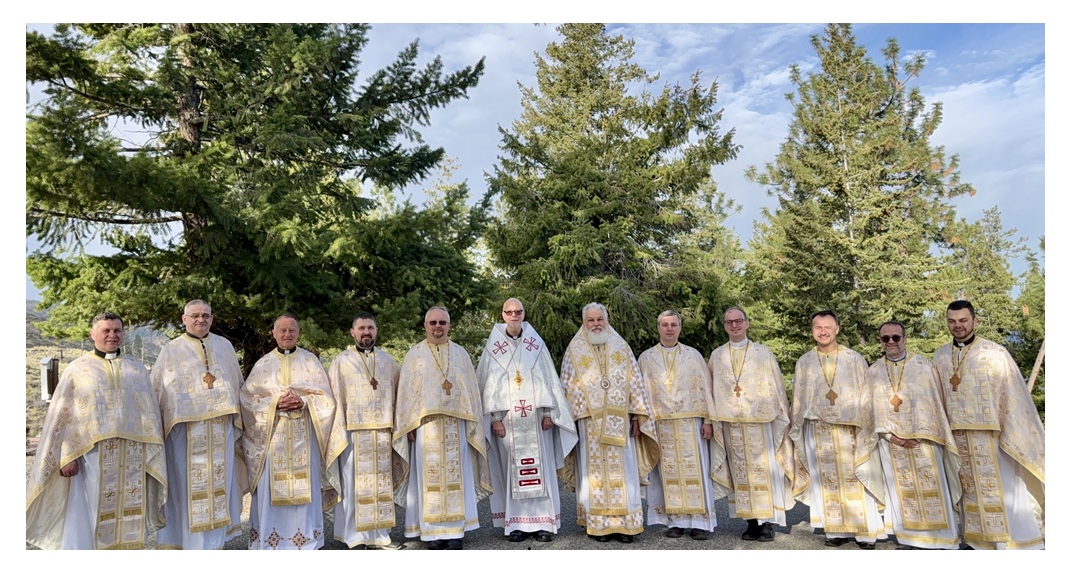
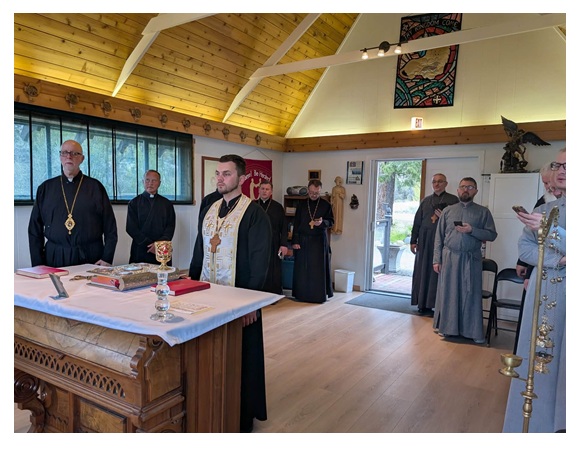
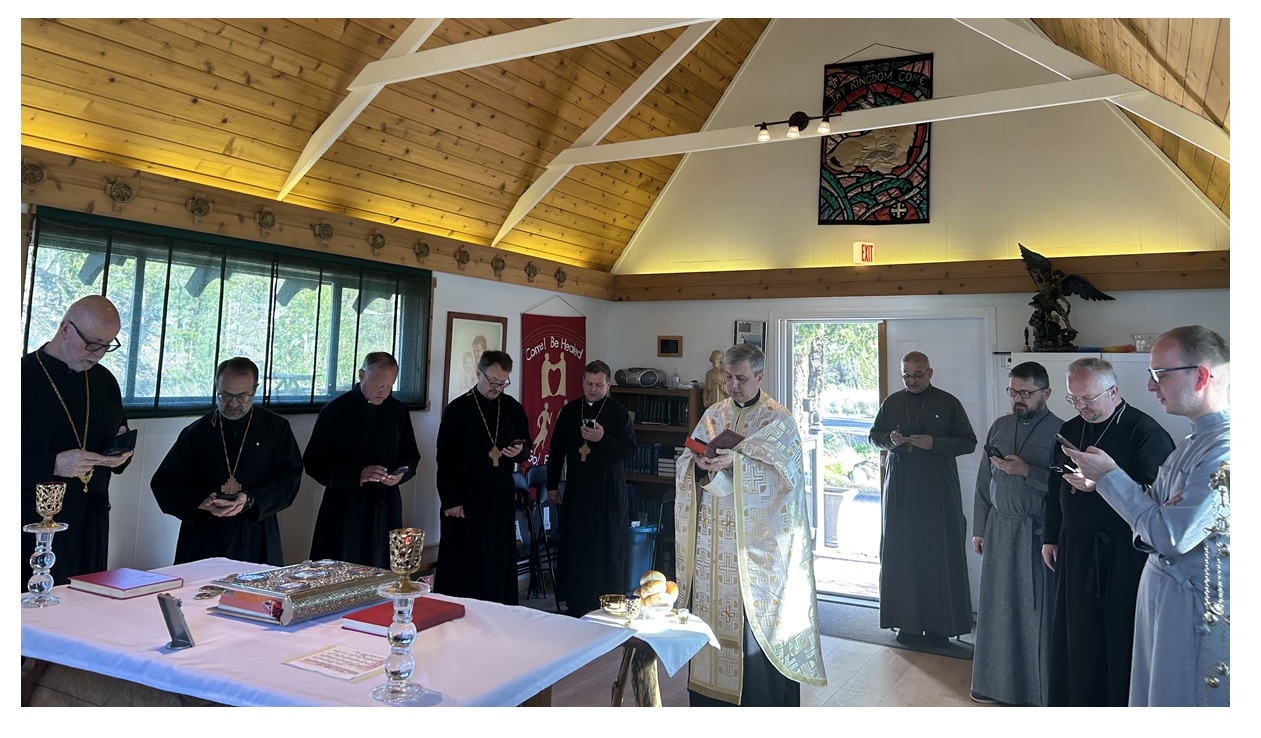
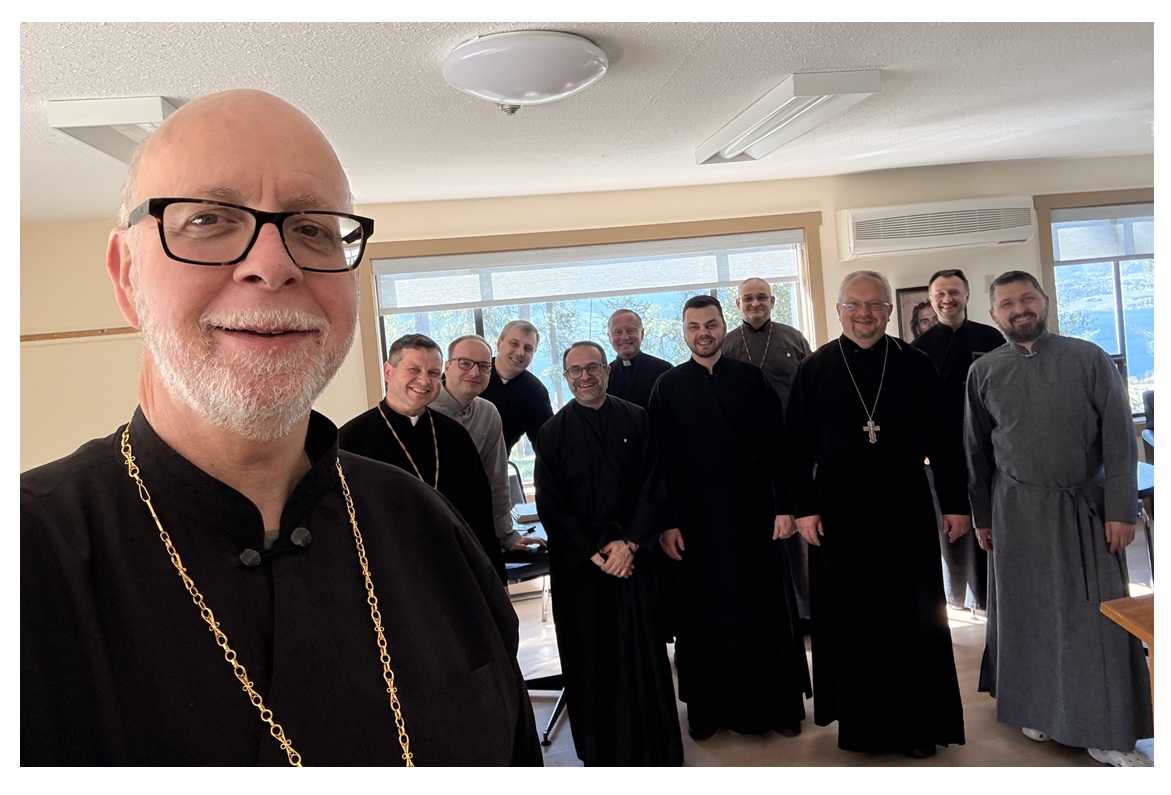
The priests of the Eparchy of New Westminster, together with their bishop, hold an annual retreat in the early spring. This year, they moved it from the month of May to April. The retreat took place on the week following the Sunday of the Myrrh-bearing Women and so the joy of Easter continued to pervade the liturgical schedule of the retreat. Christ is Risen!
The priests travelled from the greater Vancouver region of the “Lower mainland”, from up north and from Vancouver Island. They joined the priests who served in the Okanagan Valley. Once again, the location chosen was the Seton House of Prayer retreat centre in the Kelowna suburbs. Seton House, operated by the Diocese of Nelson is a truly blessed, peaceful site with all the amenities one might need as well as live deer freely wondering the property.
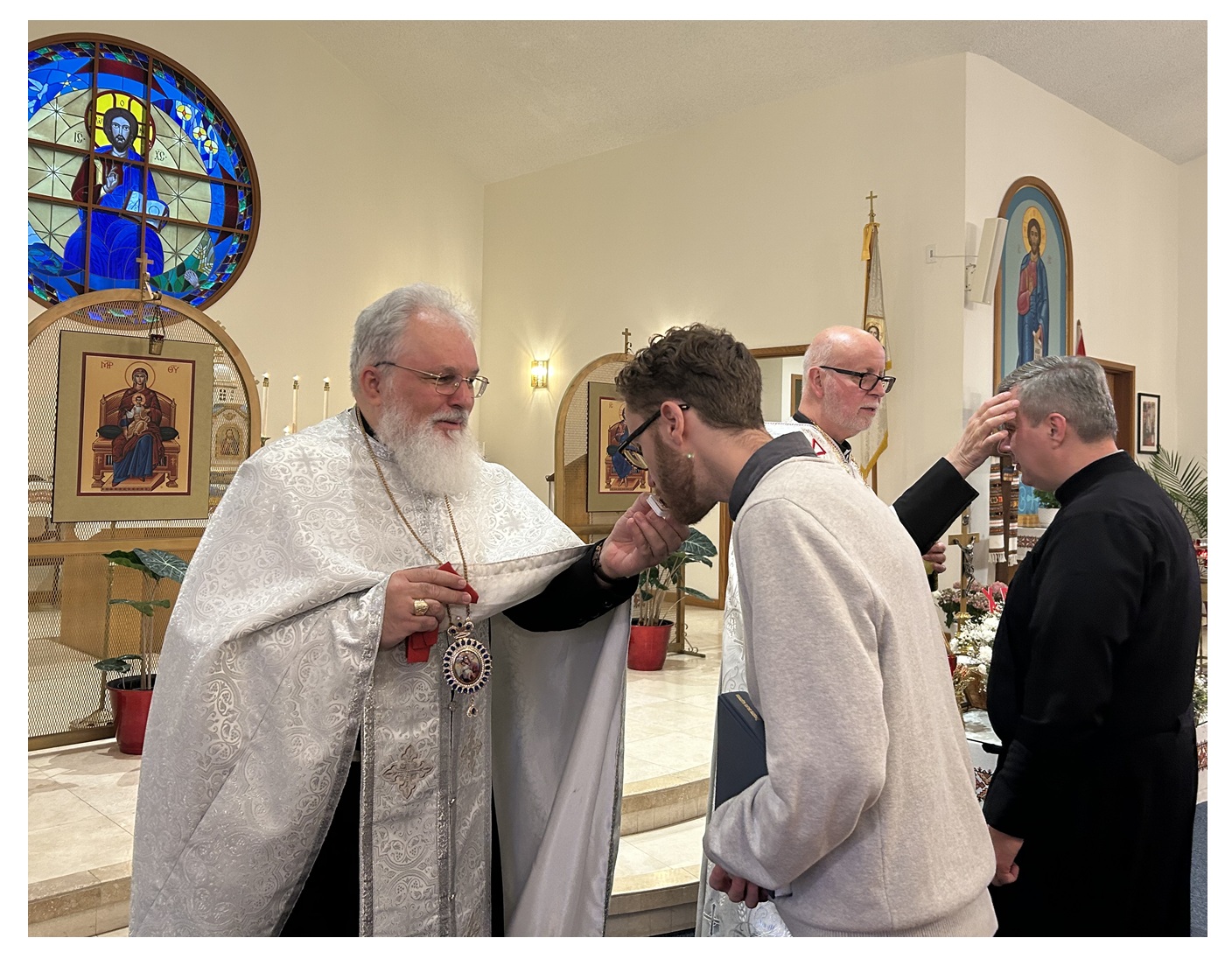
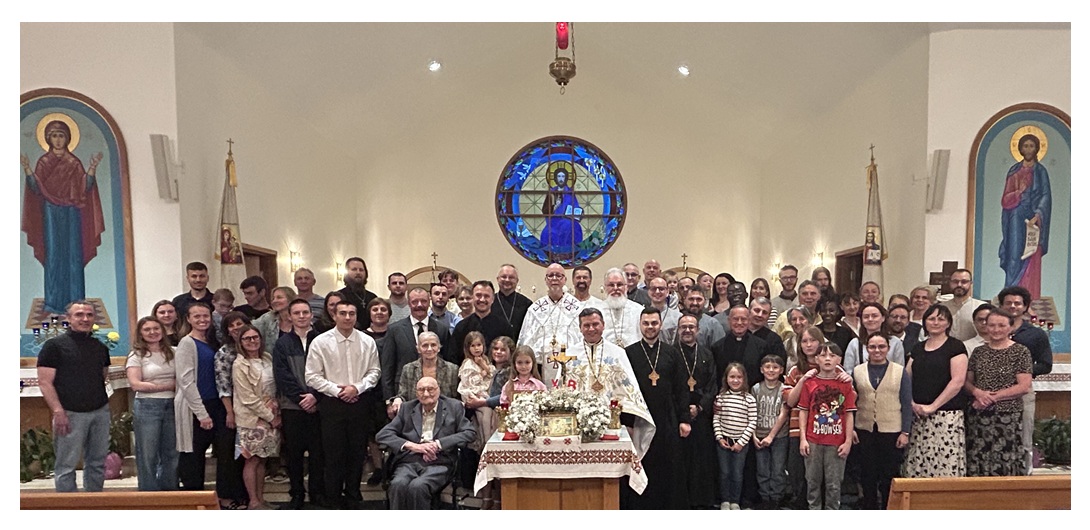
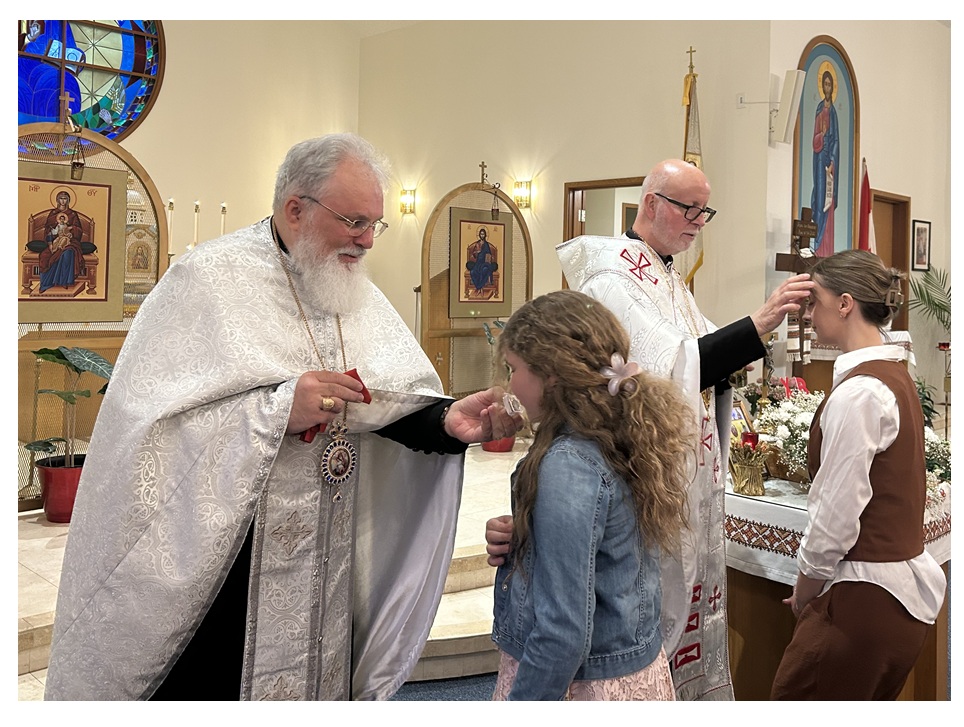
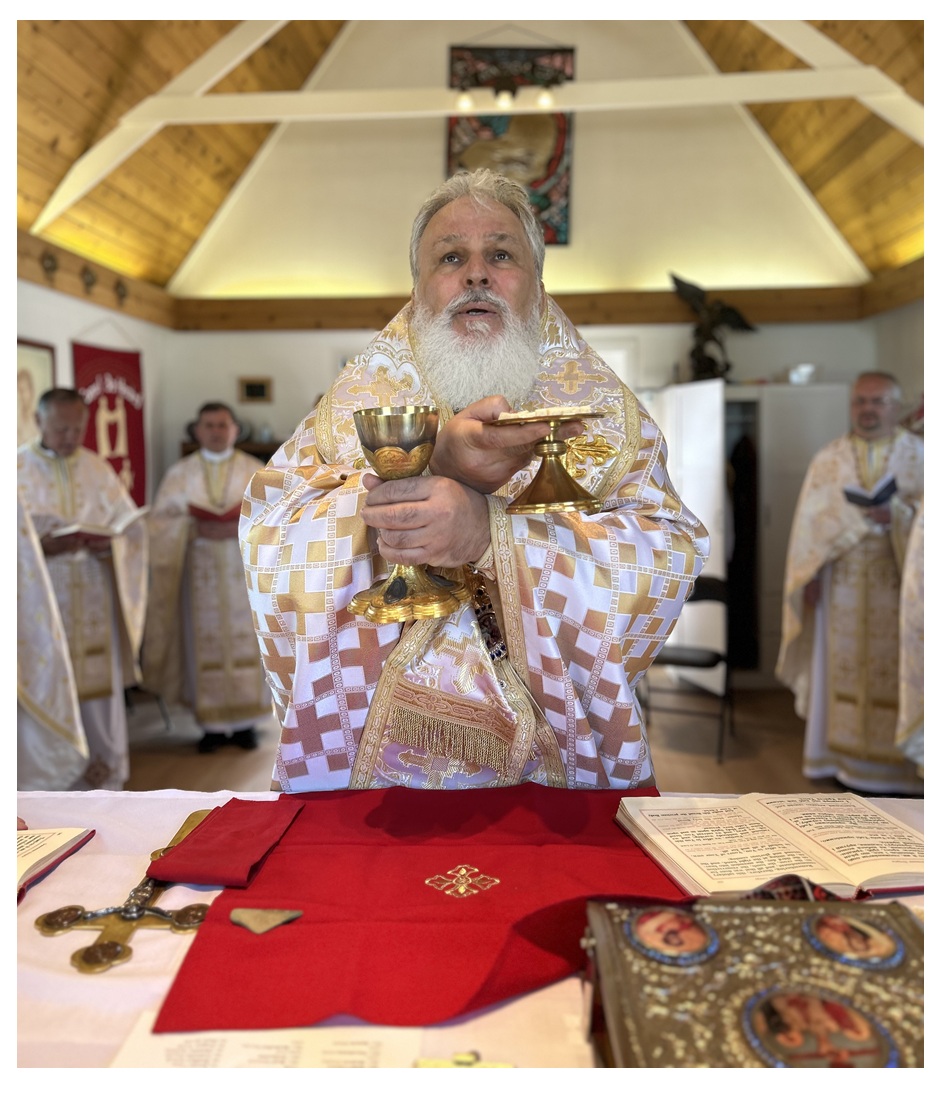
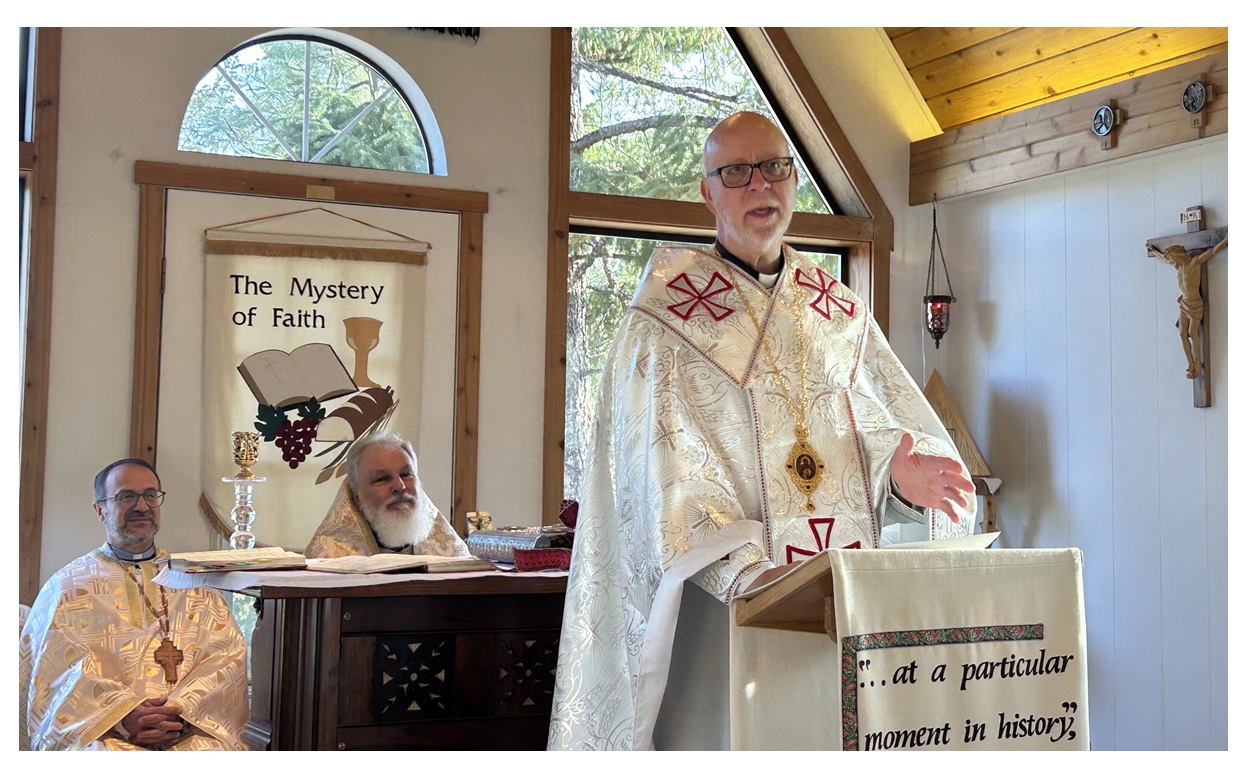
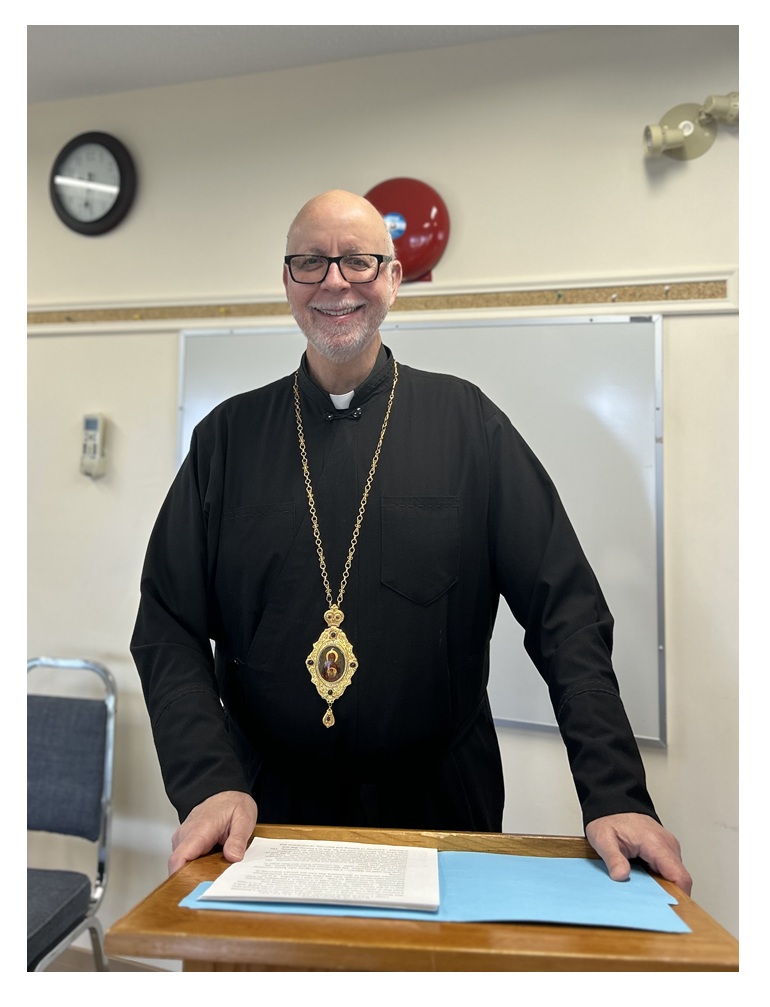
The opening of the retreat actually occurs in a public manner with the clergy gathering at the local parish of the Dormition of the Mother of God where a Moleben’ is prayed and the retreat master preaches his first talk of the week. Bishop Paul Chomnycky, OSBM of Ukrainian Catholic Eparchy of Stamford Connecticut agreed to lead the retreat this year. He shared with the people a great deal of additional insights about the Myrrh-bearers and their encounter at the empty tomb of Christ. The moleben’ was to the Martyrs of Pratulyn. Following the moleben’, Bishop Paul also anointed the congregation while local Bishop, Michael Kwiatkowski presented the relics of the Pratulyn Martyrs for veneration. The parish then hosted the clergy and all the other guests to an amazing lasagna supper in the parish hall.
Throughout the next few days, Bishop Paul gave excellent talks based on highlights from Salvation history - the resurrection of Christ, the Annunciation and other well-known episodes. However, he always infused the theology of the events with his own rich experience of spiritual encounters during his pilgrimages to the Holy Land and in the footsteps of the Apostle Paul, etc. [see themes and highlights below*]
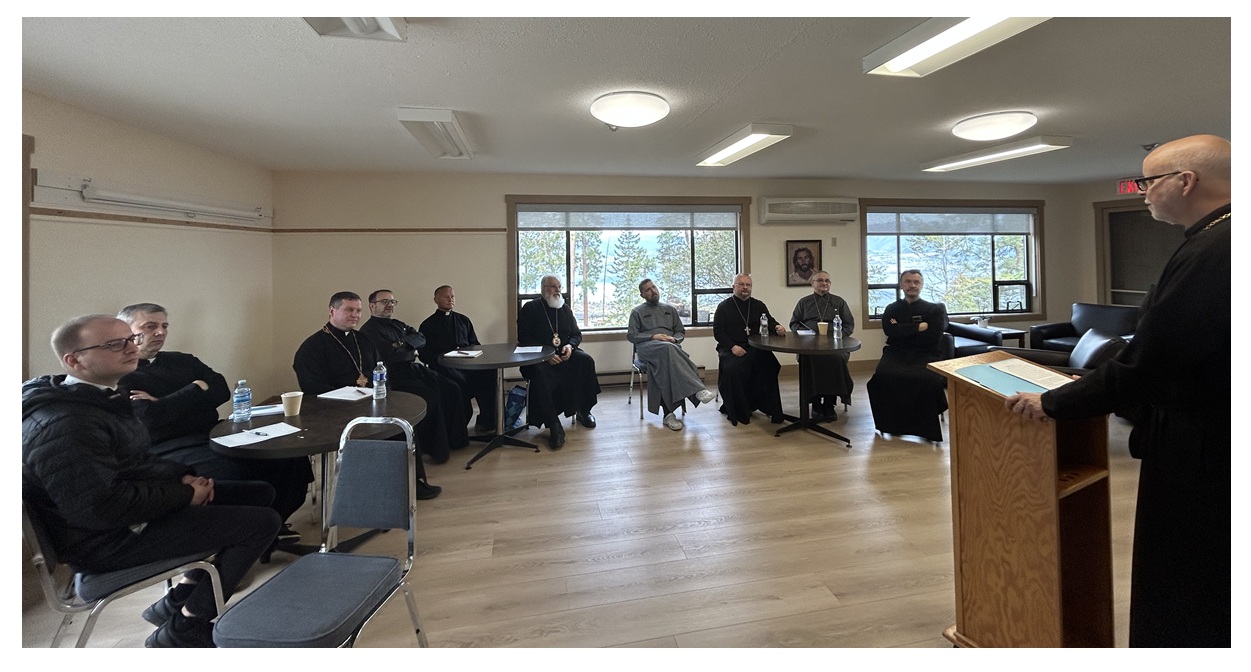
One of the much-enjoyed highlights during the retreat were the open discussions on various spiritual and ecclesial themes each evening after supper. The clergy were able to share thoughts, experiences and questions in a truly fraternal atmosphere and share responses with each other. Among the themes was how the eparchy could tap into the period before the upcoming 2033 Jubilee of Redemption for a comprehensive spiritual renewal of the eparchy. Also, the new approach needed for the Evangelization and catechization of our own young, so the faith truly becomes the thriving heart of our lives for ever.
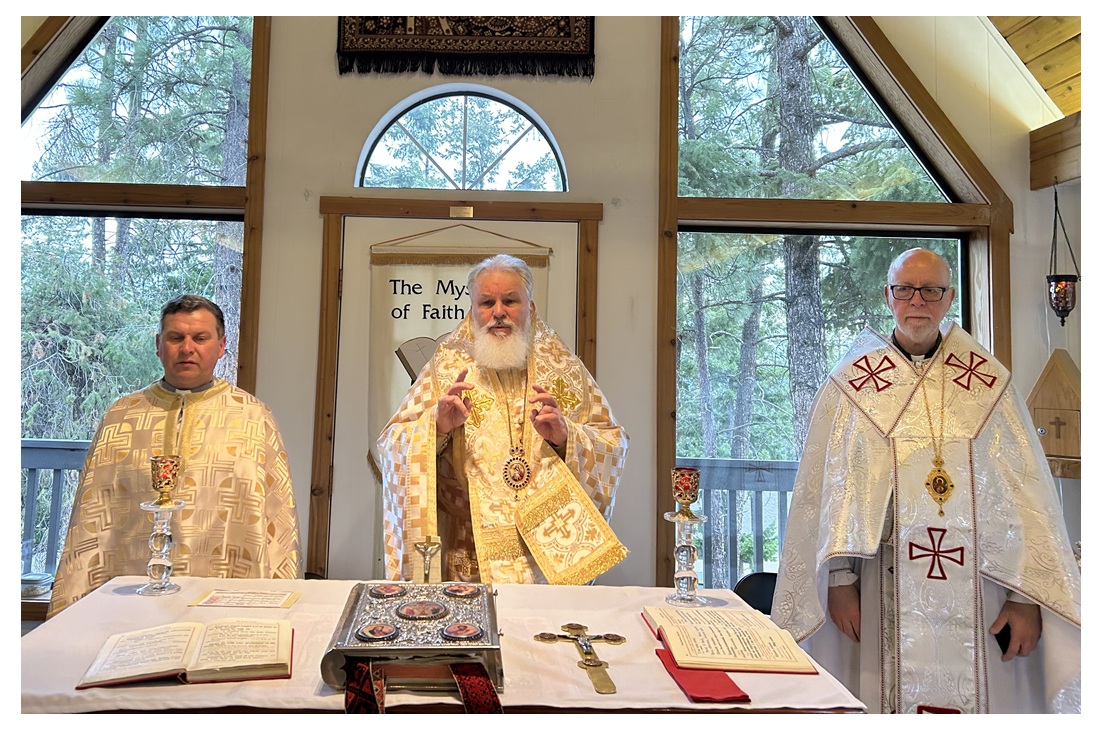
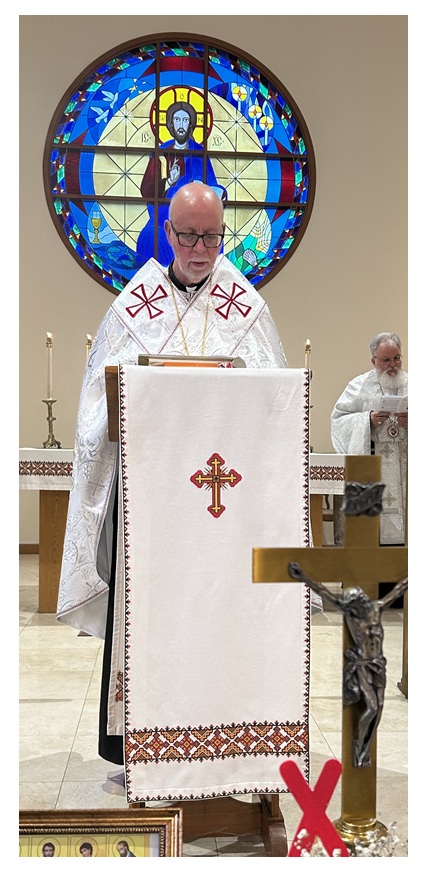
The prayer life of the retreat included a daily Divine Liturgy as well as the hours and vespers, as well as other times of common or private prayer. The priests took turns leading each of the services. The Eucharistic liturgy on Thursday and panakhyda were prayed for the repose of the souls of all the deceased clergy and women religious that served the eparchy at one time or other.
The usual practice was that the last morning of the retreat is dedicated to a clergy conference where the Bishop and the Priests could dedicate a few hours to talking about pastoral and administrative questions important to the eparchy. However, as circumstances this year had the retreat end after breakfast on the last day, rather than after lunch, the conference segment occurred in the evening on the night before. On the last day, Bishop Paul preached at the closing Divine Liturgy and imparted a blessing to all the clergy before they enjoyed a last breakfast together and then departed back home in various directions to get back to their home parishes in time for the Sunday of the Paralytic.
Please keep your priest and all priests in your prayer as they serve the Lord and His People.
*SOME OF BISHOP PAUL’S THEMES AND HIGHLIGHTS
In his first reflection, Bishop Paul spoke about the Myrrh-bearing women, who went to the tomb out of love - a love that overcame fear. He emphasized that our “myrrh” consists of prayer, good works, and all that we bring to Christ. Despite the “stone” of difficulties, the women continued forward and were rewarded with the joy of the Resurrection.
The second day, in his conferences, the retreat master invited the clergy to renew their original calling - the moment when each first heard God’s voice and stepped out of their comfort zone to follow Him.
Reflecting on the Road to Emmaus, Bishop Paul highlighted that faith is born through listening to the Word of God and fulfilled in the breaking of the bread - in the Eucharist. Though the disciples did not immediately recognize Christ, their hearts were “burning” as He spoke. This served as a reminder that a priest is called to help others recognize Christ in their lives.
In subsequent reflections, Bishop Paul meditated on the fourth chapter of the Gospel of Luke, emphasizing that Christ fulfilled the will of the Father without seeking human approval. This became a call for priests to do what is right before God, rather than seeking the approval of others.
The third day carried a strong Paschal message: “Pascha is not merely a remembrance, but a transformative event that calls us to action.” Like the Myrrh-bearers, Christians are called to proclaim the Resurrection, even when it is inconvenient.
Further reflections focused on the Most Holy Theotokos - whose “yes” to God changed the world, and on the calling of the Apostle Peter, whom Christ invites to follow Him despite his weakness and fear. A key message was that the Lord does not turn away when we say, “Depart from me,” but instead continues to call us.
The fourth day began with the First Hour and greetings to the clergy bearing the name of St. George. In the reflection on Martha and Mary, Bishop Paul emphasized the need to unite active ministry with contemplative presence before God. The day also included the Divine Liturgy and a Panakhyda for the deceased clergy of the Eparchy of New Westminster.
These days became a time of renewal, as through prayer, the Word of God, and fraternal unity, the clergy rediscovered the strength of their vocation—to bring the light of the Risen Christ to others.
Священики єпархії Нью-Вестмінстера разом зі своїм єпископом проводять щорічні реколекції на початку весни. Цього року їх було перенесено з травня на квітень. Реколекції розпочалися в понеділок після Неділі Мироносиць, тож радість Великодня продовжувала пронизувати літургійний ритм цих днів. Христос Воскрес!
Священики приїхали з регіону м. Ванкувера («Нижнього материка»), з півночі та з острова Ванкувер. Вони приєдналися до духовенства, яке служить у долині Оканаґан. Місцем проведення знову став реколекційний центр «Дім Сітон» у передмісті Келоуни. «SetonHouse», яким керує дієцезія Нельсона, — це справді благословенне й мирне місце з усіма необхідними зручностями, а також із багатою фауною, оленями та іншими тваринами, які вільно блукають територією.
Відкриття реколекцій відбулося публічно: духовенство зібралося в місцевій парафії Успіння Пресвятої Богородиці, де було відслужено молебень, а керівник реколекцій виголосив першу науку тижня. Владика Павло Хомницький, ЧСВВ, єпископ Української католицької єпархії Стемфорда (штат Коннектикут), погодився очолити реколекції цього року. Він поділився з вірними багатьма глибокими роздумами про Мироносиць та їхню зустріч біля порожнього гробу Христа. Молебень було відслужено на честь мучеників Пратулина. Після богослужіння владика Павло також помазав вірних, а місцевий єпископ Михайло Квятковський представив мощі мучеників Пратулина для вшанування. Згодом парафія запросила духовенство та гостей на щедру вечерю з італійською лазаньєю в парафіяльній залі.
Протягом наступних кількох днів владика Павло виголошував змістовні науки, засновані на ключових моментах історії спасіння — Воскресінні Христа, Благовіщенні та інших відомих подіях. Водночас він наповнював богословський зміст цих подій власним багатим досвідом духовних зустрічей під час паломництв до Святої Землі та подорожей слідами апостола Павла.
Одним із найцікавіших моментів реколекцій стали відкриті вечірні дискусії після вечері на різні духовні й церковні теми. Священики разом із владиками мали змогу ділитися думками, досвідом і питаннями в справді братерській атмосфері та знаходити відповіді разом. Серед тем обговорення було, зокрема, те, як єпархія може використати період перед майбутнім Ювілеєм Відкуплення 2033 року для всебічного духовного оновлення. Також йшлося про необхідність нового підходу до євангелізації та катехизації молоді, щоб віра справді стала живим і квітучим серцем нашого життя.
Молитовне життя реколекцій включало щоденну Божественну Літургію, часи, вечірню, а також інші нагоди до спільної та приватної молитви. Священики по черзі очолювали богослужіння. У четвер було звершено Євхаристійну Літургію та панахиду за упокій душ усіх померлих священнослужителів і монахинь, які служили в єпархії в різні часи.
Звичайною практикою є те, що останній ранок реколекцій присвячений конференції духовенства, під час якої єпископ і священики можуть кілька годин обговорювати пастирські та адміністративні питання, важливі для єпархії. Однак цього року, з огляду на обставини, реколекції завершилися після сніданку в останній день, а не після обіду, тому частину конференції було проведено ввечері напередодні. В останній день владика Павло проповідував на заключній Божественній Літургії та благословив усе духовенство, після чого всі разом розділили останній сніданок і роз’їхалися до своїх парафій, щоб повернутися до служіння перед Неділею Розслабленого.
Будь ласка, пам’ятайте про свого священика та всіх священиків у молитві, щоб вони ревно й у святості служили Господу та Його народові.
On April 26, forty years will have passed since the accident at the Chernobyl nuclear power plant (NPP) - a tragedy that caused a socio-ecological catastrophe on a global scale that forever changed the face of our land and the fate of millions of people.
Forty years, according to biblical tradition, is a special period: a time of probation, cleansing of memory and a deep rethinking of the path taken, as well as the experience of God's presence among us. Just as the people of Israel once travelled through the desert for forty years to the promised land, so we have been carrying the burden of the Chernobyl disaster for four decades. Today we pause to reflect on this path and draw lessons for the future.
First of all, let us bow our heads in respect before the achievement of the liquidators. They became the living embodiment of the words of Christ: “Greater love hath no one than this: to lay down one’s life for one’s friends.” (John 15:13). These people went into the fire and overcame the consequences of the nuclear disaster not for the sake of glory, but for the sake of saving lives. Their sacrifice stopped the spread of deadly radiation, and they became a living shield for all of Europe and the world.
Today, when Ukraine is once again burning in the flames of war, we see the same spirit of self-sacrifice in our soldiers and rescuers. We prayerfully remember everyone who gave their health and lives for our safety. May this sorrowful anniversary become a day of prayer: let us pray for those who died while eliminating the consequences of this catastrophe.
Even after forty years, we know only a part of the numerous eco-social challenges of Chernobyl, which are reflected in the fates of the victims. This disaster was not only a technical error – it was a consequence of the spiritual blindness of the Soviet system, which placed ideology above human life, and false greatness above truth and moral responsibility.
The experience of Chernobyl demonstrates that humankind cannot arbitrarily and with impunity rule over God's world. The disaster reminds us of our common responsibility for all of God's creation, for the environment. We must realize that the abuse of the Creator's gifts – including: air and water pollution, land depletion, destruction of nature, wasteful use of energy and resources - is a sin against God and against the present and future generations.
We are experiencing the current anniversary of Chernobyl in the conditions of a full-scale war that is destroying not only human lives, but also God's creation - land, water and forests, turning them into a disaster zone. The enemy is using the civilian nuclear infrastructure as a tool of blackmail. The occupation of the Chernobyl NPP at the beginning of the invasion and the constant threat to the Zaporizhzhia NPP indicate that the lessons of the past have not been learned by everyone.
The world has once again found itself on a dangerous precipice, where human pride and irresponsibility can lead to new disasters. In this context, we call on the international community to take decisive action to prevent a repetition of a tragedy whose scale could exceed the events of 1986.
By destroying the energy infrastructure, the aggressor not only deprives people of their usual living conditions, but also directly threatens the health and lives of millions. The tragic experience of Chernobyl and the modern challenges of war call us with particular force to ecological conversion, of which the Church constantly reminds us.
So let us become wise and responsible stewards of the Creator's gifts. Every unit of energy saved, every tree planted, every avoidance of excessive consumption is our contribution to preventing new environmental disasters.
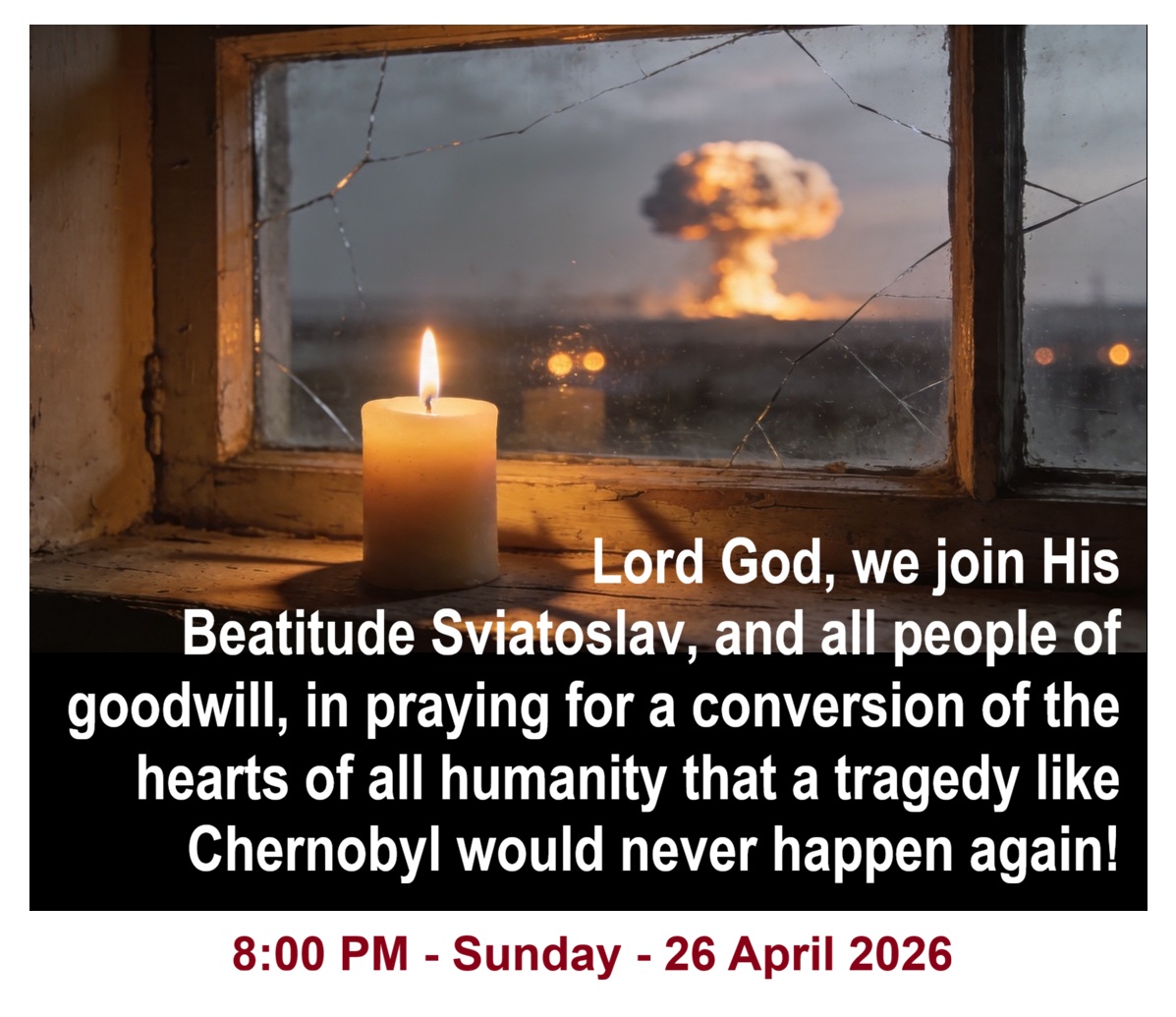
The UGCC Bureau for Ecology on the fortieth anniversary of the Chernobyl accident initiated the All-Ukrainian eco-social campaign “Candle of Memory” under the slogan “Remember the past – protect the future”. Its goal is to honour the liquidators and victims of the disaster, as well as to call for ecological repentance and active protection of the environment in the face of modern threats.
We invite all the faithful of our Church and people of good will to offer prayers for the repose of the souls of the deceased hero-liquidators and for the health of those who still bear the burden of the consequences of the Chernobyl disaster. Let us light a “Candle of Memory” on the windowsills of our homes on Sunday, April 26, at 8:00 p.m. as a symbol of our earnest prayer and hope for the healing of creation. Let us be in solidarity with those who need medical and social assistance as a result of the Chernobyl accident.
May the Lord, who conquered death by His resurrection, help us to heal the wounds of Chernobyl. Let us implore the risen Christ for the gift of ecological conversion, so that we may be worthy witnesses of God's love, overcome evil, protect our common home, and multiply the gifts of the Creator.
The Lord's blessing upon you!
† SVIATOSLAV
Issued in Kyiv,
at the Patriarchal Cathedral of the Resurrection of Christ,
on the day of the Holy Hieromartyr Januarius and those with him,
Двадцять шостого квітня минає сорок років від часу аварії на Чорнобильській атомній електростанції – трагедії, що спричинила соціально-екологічну катастрофу глобального масштабу і назавжди змінила обличчя нашої землі та долю мільйонів людей.
Сорок років, за біблійною традицією, – це особливий період: час випробування, очищення пам’яті та глибокого переосмислення пройденого шляху, а також досвіду Божої присутності серед нас. Як колись ізраїльський народ сорок років мандрував пустелею до обітованої землі, так і ми впродовж чотирьох десятиліть несемо тягар Чорнобильської катастрофи. Сьогодні ми зупиняємося, щоб осмислити цей шлях і винести уроки для майбутнього.
Насамперед схилімо голови перед подвигом ліквідаторів. Вони стали живим втіленням слів Христа: «Ніхто неспроможен любити більше, ніж тоді, коли він за своїх друзів життя віддає» (Ів. 15, 13). Ці люди йшли у вогонь і долали наслідки атомного лиха не заради слави, а заради спасіння життя. Їхня жертва зупинила поширення смертельної радіації та стала живим щитом для всієї Європи та світу.
Сьогодні, коли Україна знову палає у вогні війни, ми бачимо той самий дух самопожертви в наших воїнах і рятувальниках. Молитовно згадуємо кожного, хто віддав своє здоров'я і життя заради нашої безпеки. Нехай цей день скорботних роковин стане днем молитви: помолімося за тих, хто загинув, ліквідовуючи наслідки цієї катастрофи.
Навіть через сорок років ми знаємо лише частину численних екосоціальних викликів Чорнобиля, які відображаються в долях постраждалих. Ця катастрофа була не лише технічною помилкою – вона стала наслідком духовної сліпоти радянської системи, яка поставила ідеологію вище за людське життя, а фальшиву велич — вище за істину та моральну відповідальність.
Досвід Чорнобиля засвідчує: людина не може свавільно й безкарно панувати над Божим світом. Катастрофа нагадує про нашу спільну відповідальність за все Боже створіння, за довкілля. Ми маємо усвідомити: зловживання дарами Творця — забруднення повітря й води, виснаження землі, нищення природи, марнотратне використання енергії та ресурсів — є гріхом проти Бога, ближніх і майбутніх поколінь.
Нинішні роковини Чорнобиля ми переживаємо в умовах повномасштабної війни, яка нищить не тільки людські життя, а й Боже створіння — землю, воду і ліси, перетворюючи їх на зону лиха. Ворог використовує цивільну ядерну інфраструктуру як інструмент шантажу. Окупація Чорнобильської АЕС на початку вторгнення та постійна загроза на Запорізькій АЕС свідчать, що уроки минулого засвоєні не всіма.
Світ знову опинився на небезпечній межі, де людська гординя і безвідповідальність можуть призвести до нових катастроф. У цьому контексті закликаємо міжнародну спільноту до рішучих дій, щоб не допустити повторення трагедії, масштаби якої можуть перевершити події 1986 року.
Руйнуючи енергетичну інфраструктуру, агресор не лише позбавляє людей звичних умов життя, а й безпосередньо загрожує здоров’ю і життю мільйонів. Трагічний досвід Чорнобиля та сучасні виклики війни з особливою силою закликають нас до екологічного навернення, про яке постійно нагадує Церква.
Тож станьмо мудрими і відповідальними управителями дарів Творця. Кожна зекономлена одиниця енергії, кожне посаджене дерево, кожна відмова від надмірного споживання — це наш внесок у запобігання новим екологічним лихам.
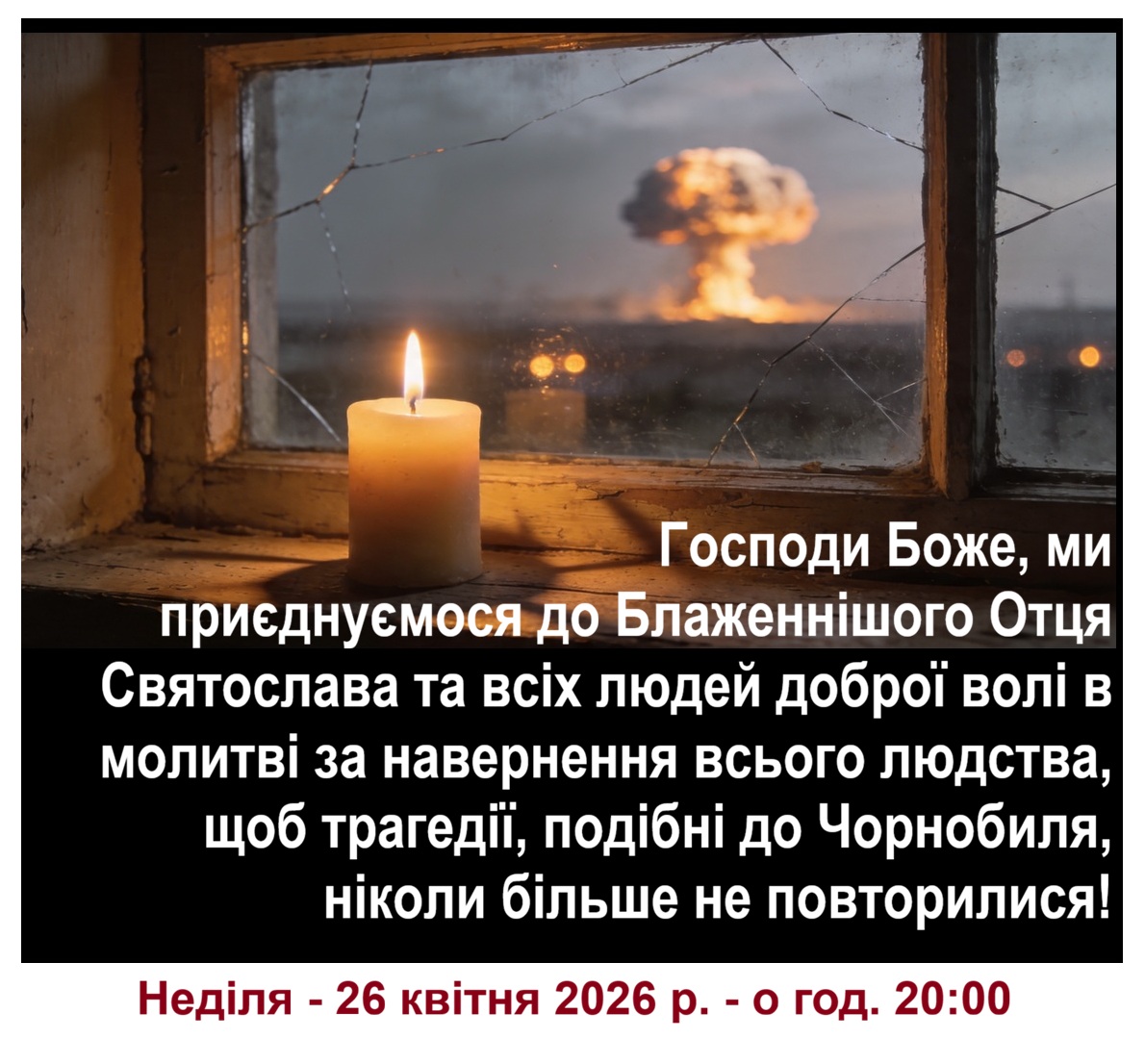
Бюро УГКЦ з питань екології до сорокових роковин аварії на ЧАЕС ініціювало Всеукраїнську екосоціальну акцію «Свічка пам’яті» під гаслом «Пам’ятати минуле – берегти майбутнє». Її мета — вшанувати ліквідаторів і жертв катастрофи, а також закликати до екологічного покаяння й активного захисту довкілля в умовах сучасних загроз.
Запрошуємо всіх вірних нашої Церкви та людей доброї волі піднести молитви за упокій душ спочилих героїв-ліквідаторів і за здоров’я тих, хто досі несе тягар наслідків Чорнобильської катастрофи. Запалімо в неділю, 26 квітня, о 20:00 на підвіконнях наших осель «Свічку пам’яті» як символ незгасної молитви і надії на зцілення створіння. Будьмо солідарними з тими, хто потребує медичної та соціальної допомоги внаслідок аварії на ЧАЕС.
Нехай Господь, який своїм воскресінням переміг смерть, допоможе нам зцілити рани Чорнобиля. Благаймо воскреслого Христа про дар екологічного навернення, щоб бути гідними свідками Божої любові, перемагати зло, берегти наш спільний дім і примножувати дари Творця.
Благословення Господнє на вас!
† СВЯТОСЛАВ
Дано в Києві,
при Патріаршому соборі Воскресіння Христового,
у день Святого священномученика Януарія і тих, що з ним,

Recent Comments