It is the practice in Ukrainian Catholic Parishes to have a “Lenten Mission” during the course of the Great Fast, during which the Faithful can hear inspiring sermons and reflections and have the opportunity to make their “Easter Confession”*.
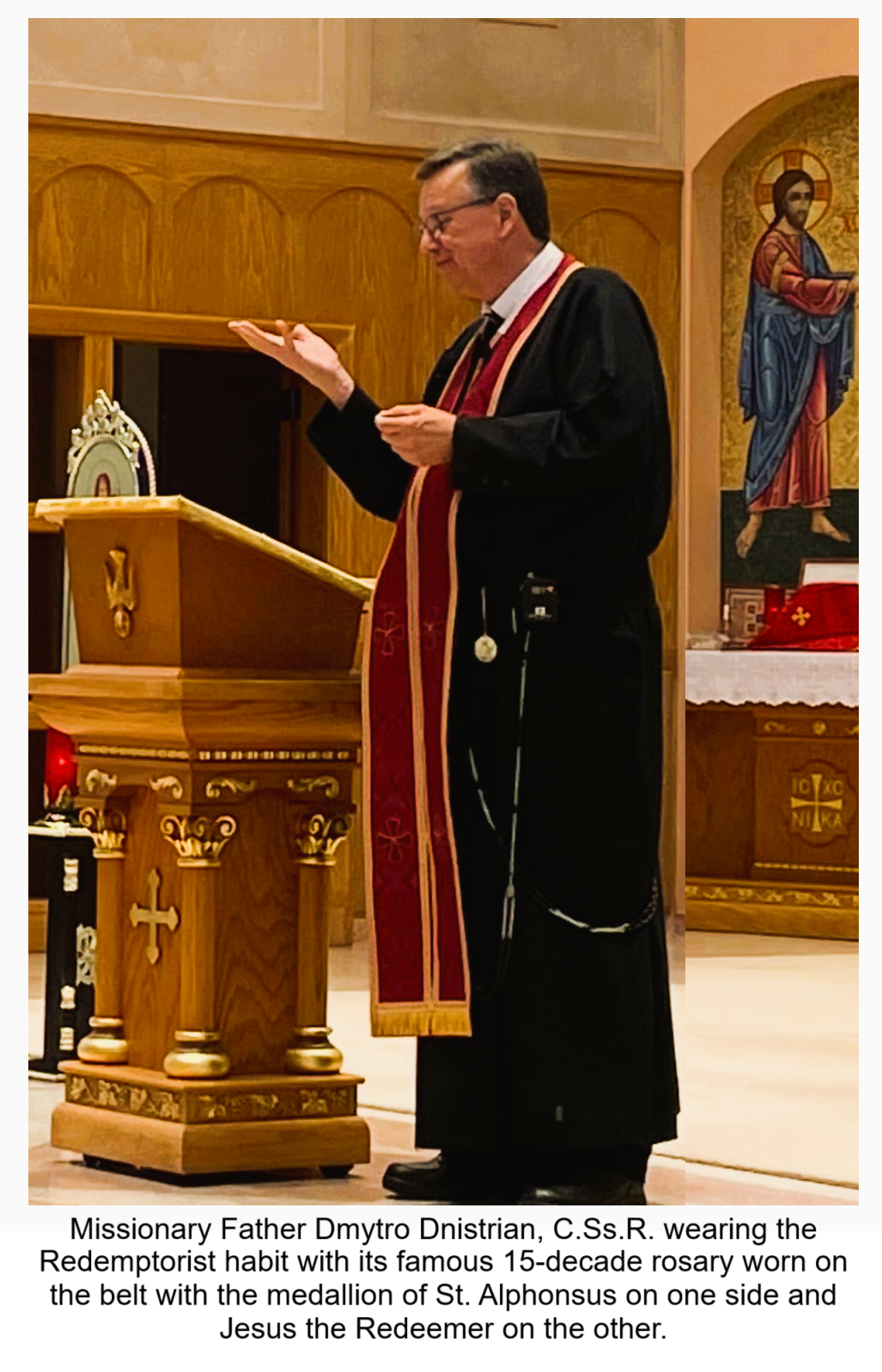
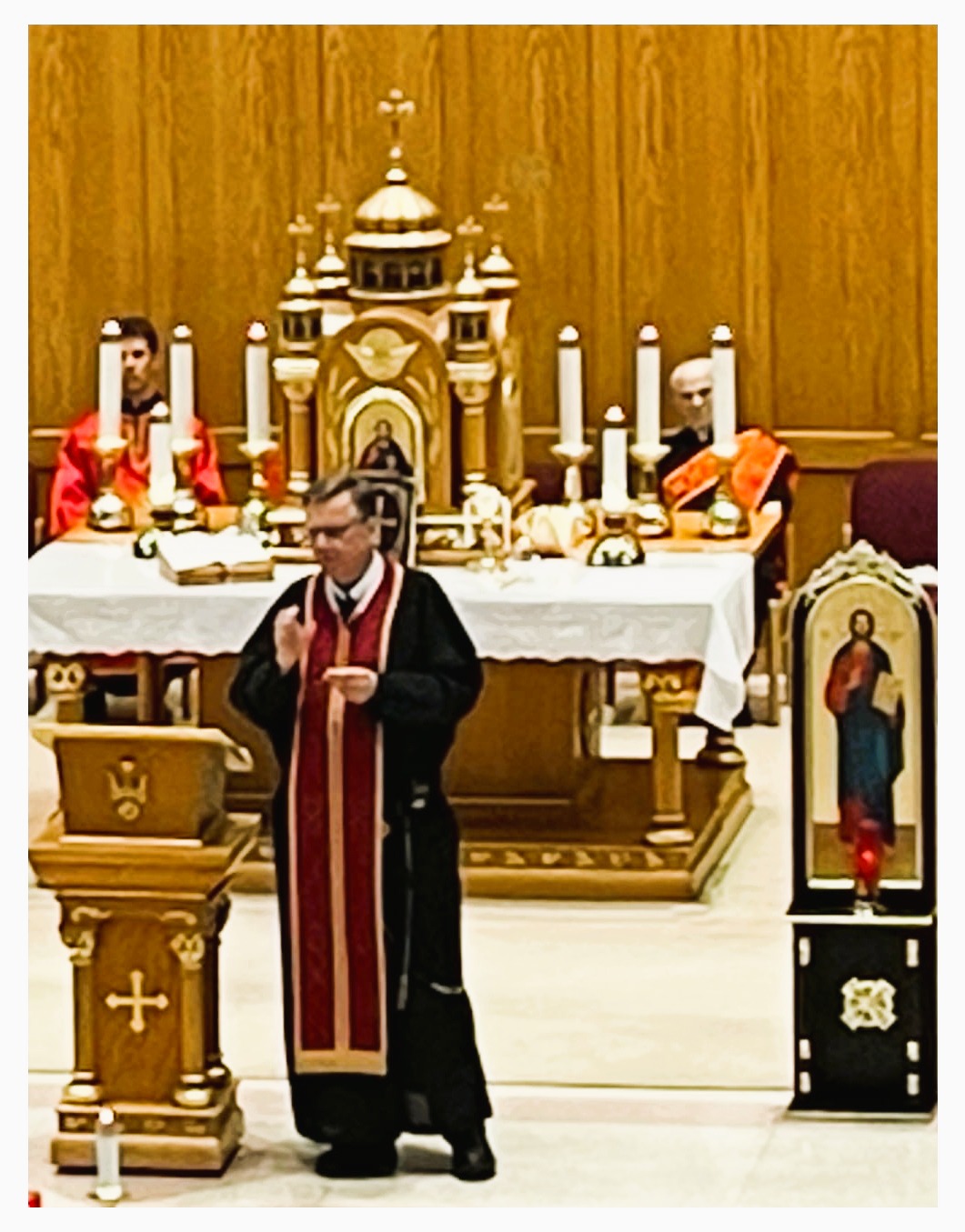
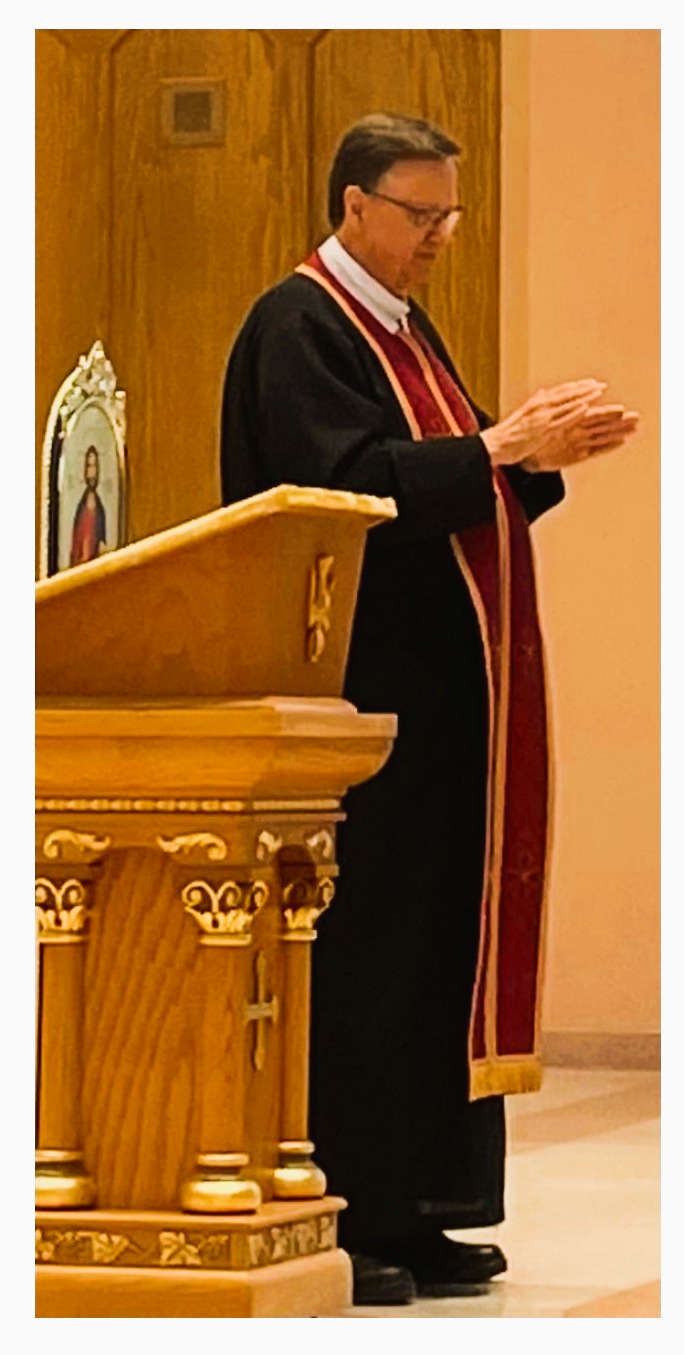
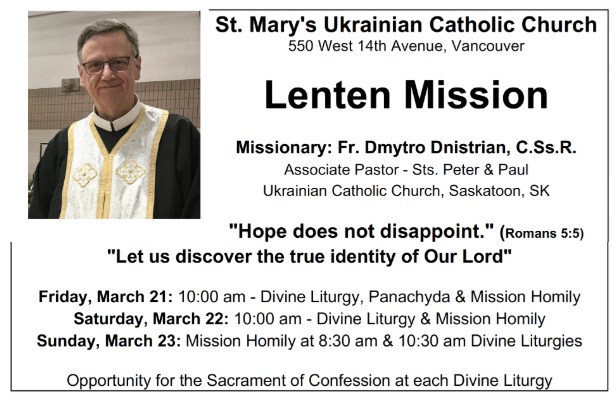
It is not always feasible for each individual parish to invite a special preacher for such a Lenten Mission/ Therefore, sometimes they may collaborate with a neighbouring parish or simply rely on a nearby parish to provide a Mission for the region. This was the case with St. Mary’s (Pokrova) Parish in Vancouver, under the pastoral care of the Basilian Fathers. The parish arranged with Redemptorist Missionary, Fr. Dmytro Dnistrian, C.Ss.R. to preach a three-day mission, including their Sunday Divine Liturgies.
Father Dmytro preached and heard Confessions at the Vancouver Parish Church from Friday March 21 through the Liturgies on Veneration of the Holy Cross Sunday March 23. Besides the parishioners of St. Mary’s faithful from other parishes in the “lower mainland” area of British Columbia attended.
Among the attendees were the Sisters Servants of Mary Immaculate who have a house in New Westminster near the Eparchial Centre. Sr. Angelica (Hodowansky), SSMI, noted that it was an “excellent turnout” of people in attendance, and she very much enjoyed the “many stories from his own personal life” that Fr. Dmytro used, rendering the points that he was making memorable. The people attending – especially the newcomers - also very much appreciated that Father Dmytro, on occasion, preached in Ukrainian.
The Pastor of St. Mary’s, Rev. Joseph Pidskalny, OSBM is happy with the mission and the number of people that made the effort to come to the talks and services over the three days.
* Although the number of faithful availing themselves of the Sacrament of Confession every month (as it is offered by most clergy prior to every Eucharist Liturgy) if quite strong throughout the Eparchy, people also traditionally make the effort to make a special Confession in preparation for their parish feast (praznyk), for Christmas and Easter. Easter Confession often takes on the character of what some call a “general Confession” where one makes an assessment of his/her year or even entire life.
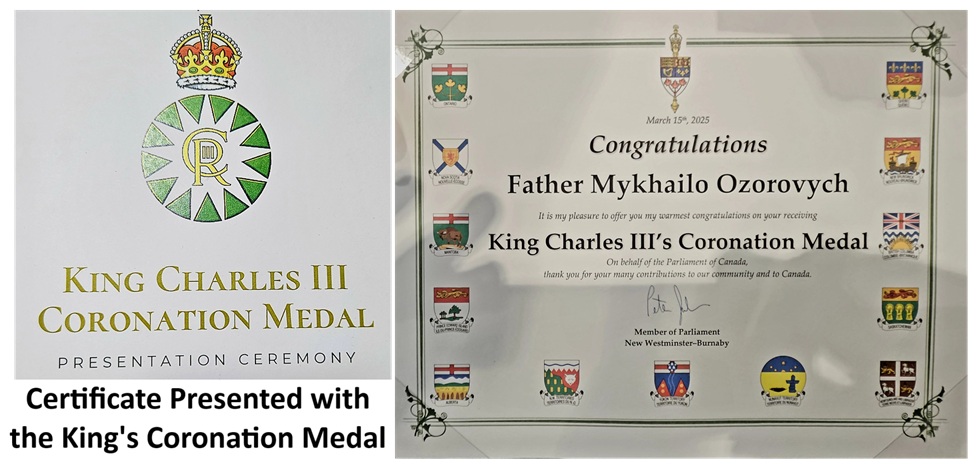
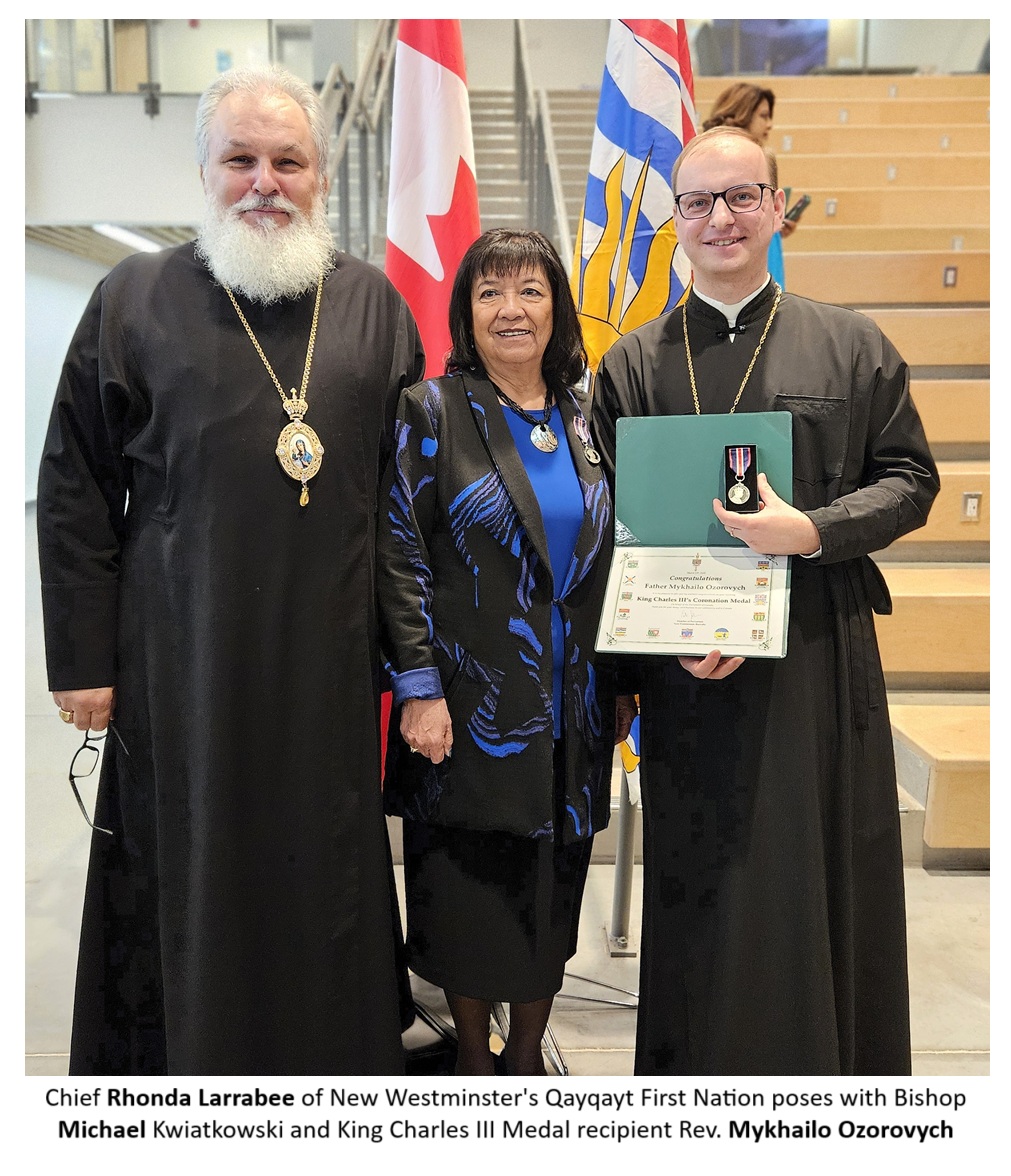
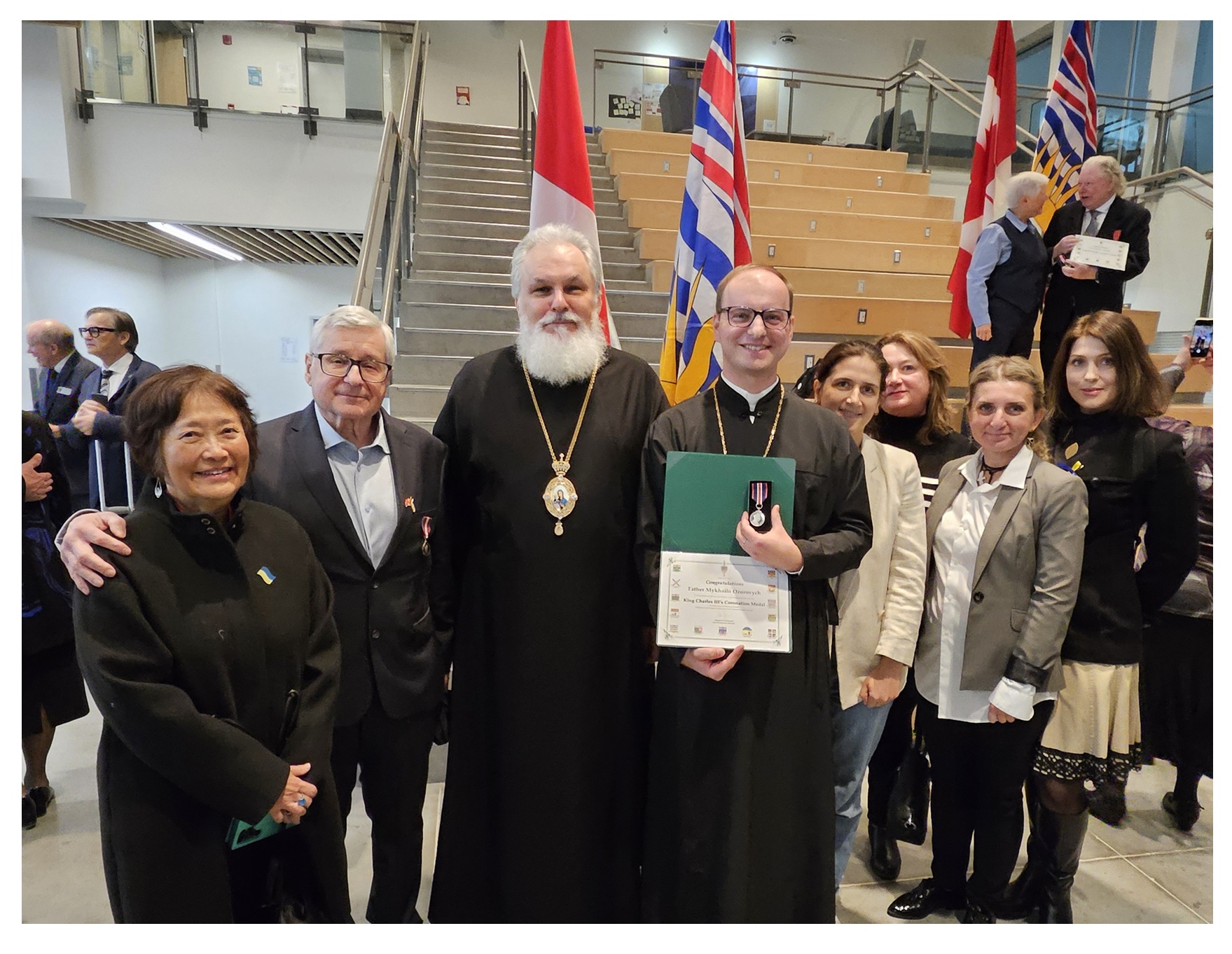
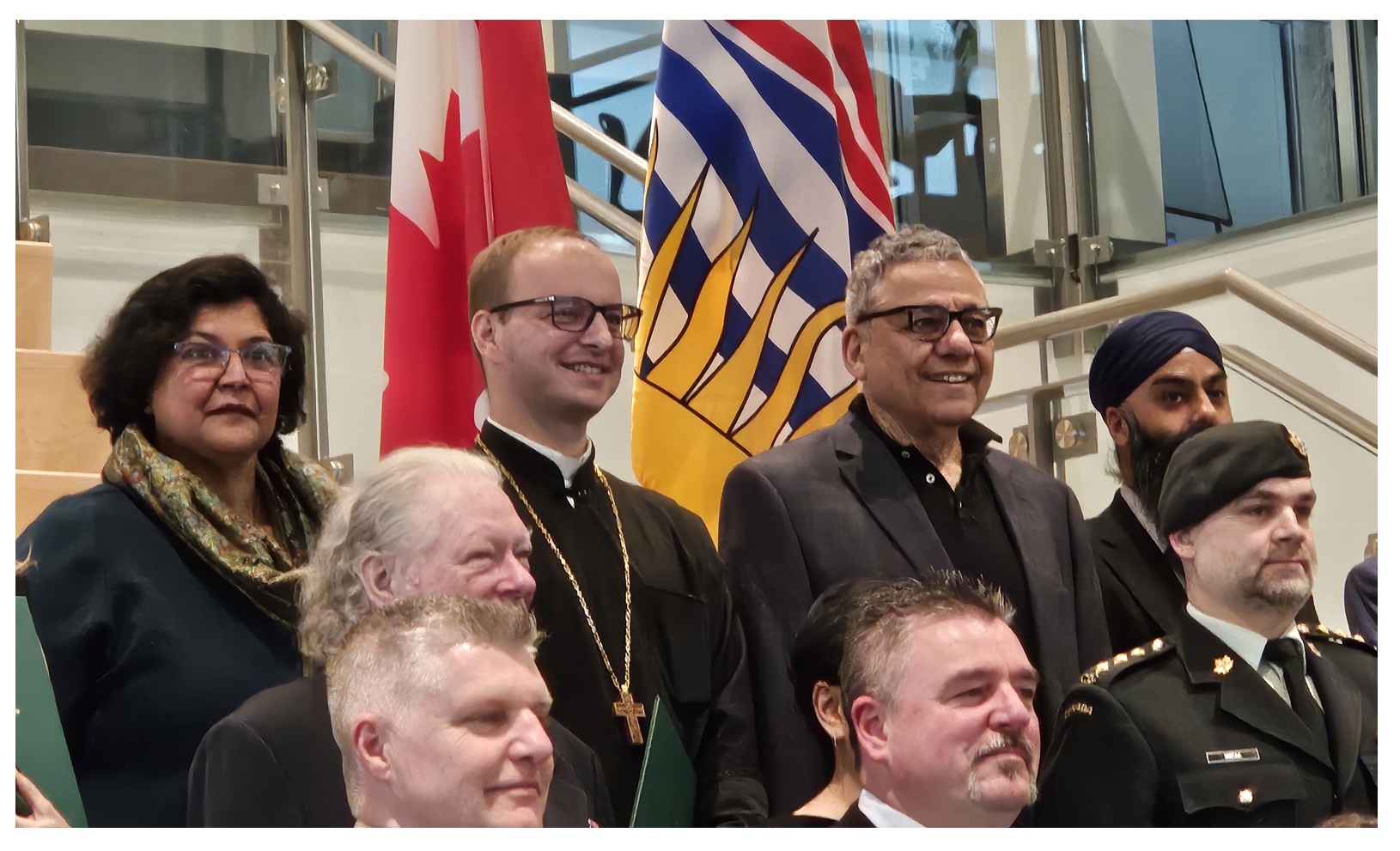
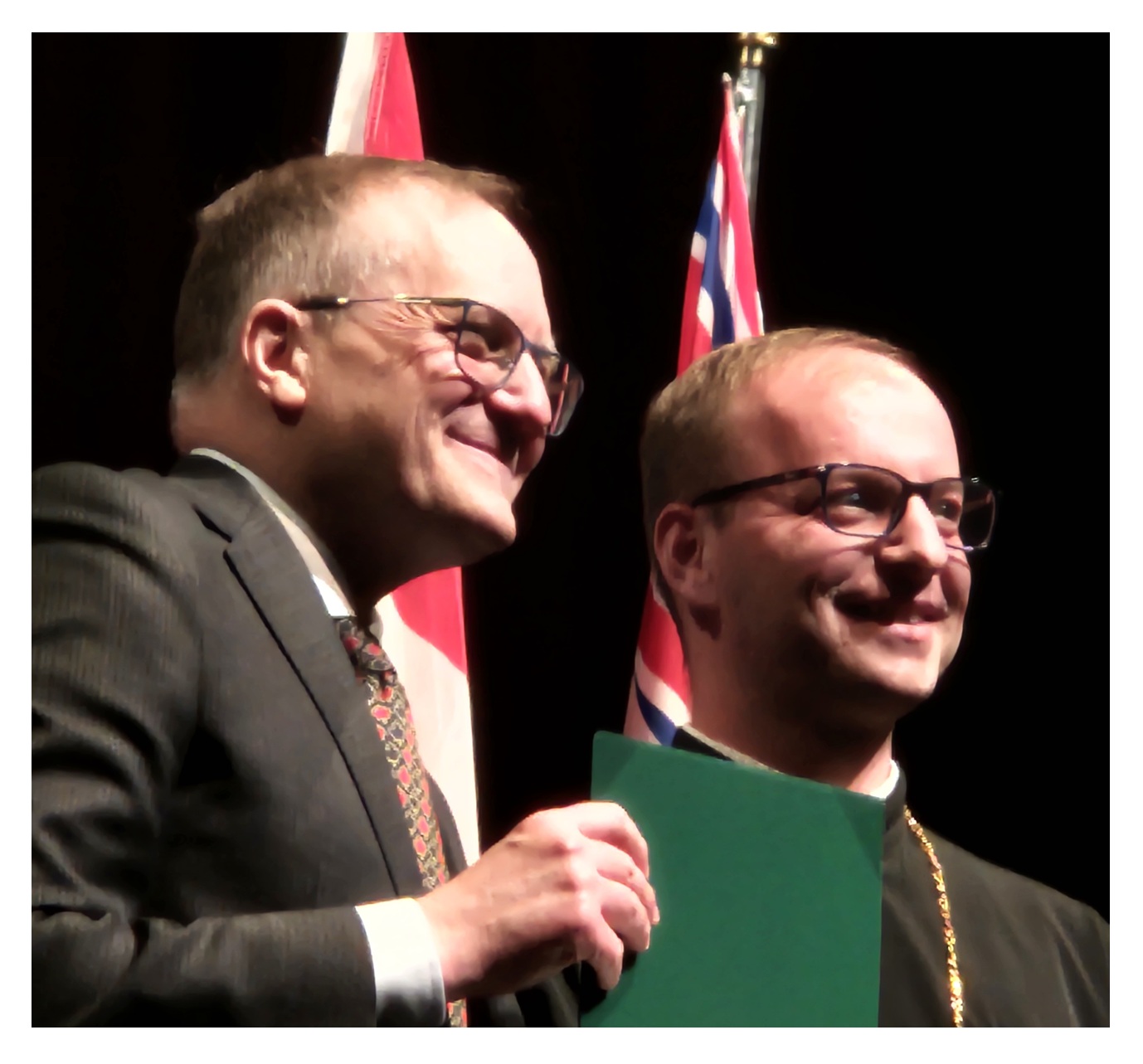
The Vicar General (Protosyncellus) of the Ukrainian Catholic Eparchy of New Westminster and Cathedral Rector, Very Rev. Mykhailo Ozorovych, received the King Charles III Coronation Medal in New Westminster, British Columbia. The awarding of the medal took place at a presentation ceremony hosted by the Member of Parliament Peter Julian at an uptown theatre.
In presenting the medal, the NDP Member of Parliament explained that Father Mykhailo was nominated because of the extensive and dedicated work that he accomplished for the many (est. 20 thousand) Ukrainian refugees that came to British Columbia since the start of Russia’s full-scale invasion of Ukraine in 2022. Fr. Mykhailo organised many volunteers and arranged for various programs to help the “newcomers” find solace and the help that they needed in Canada. It is estimated that he spearheaded efforts that helped “over 5,000” refugees. In fact, his nomination for the medal was brought forward by the very volunteers who collaborated with him and know of his tireless efforts and great accomplishments in that area.
Some family and friends of Father Mykhailo were able to attend the ceremony. This including his wife Olesia as well as parishioners and representatives of Vancouver’s Ukrainian Community.
The King Charles III Coronation Medal was created to mark the coronation of His Majesty King Charles III on 6 May 2023. The commemoration medal recognizes outstanding individuals who made a difference in their communities and to Canada as a whole.
Congratulations Father Mykhailo!
________________________________________________
ПРОТОСИНКЕЛ О. МИХАЙЛО ОЗОРОВИЧ ОТРИМАЄ МЕДАЛЬ КОРОЛЯ КАРЛА
Протосинкел (генеральний вікарій) Української греко-католицької єпархії Нью-Вестмінстера та ректор катедрального собору о. Михайло Озорович отримав у Нью-Вестмінстері, Британська Колумбія, Коронаційну медаль Короля Карна III. Вручення медалі відбулося на церемонії, яку організував депутат канадського парламенту Пітер Джуліан у театрі в центрі міста.
Вручаючи медаль, народний депутат НКП пояснив, що отця Михайла висунули на відзнаку через велику та віддану працю, яку він виконав для багатьох (приблизно 20 тисяч) українських біженців, які прибули до Британської Колумбії з початку повномасштабного вторгнення Росії в Україну у 2022 році. Отець Михайло організував багато волонтерів і влаштував різноманітні програми, щоб допомогти «новоприбулим» знайти розраду та необхідну допомогу в Канаді. За оцінками, він очолював зусилля, які допомогли «понад 5000» біженцям. Насправді його номінацію на медаль висунули ті самі волонтери, які співпрацювали з ним і знають про його невтомні зусилля та великі досягнення в цій галузі.
Деякі родичі та друзі отця Михайла мали змогу бути присутніми на церемонії. Це і його дружина Олеся, і парафіяни, і представники української громади Ванкувера.
Коронаційна медаль Короля Карла III була створена на честь коронації Його Величності Короля Карла III 6 травня 2023 року. Пам’ятна медаль відзначає видатних людей, які змінили життя своїх громад і Канади в цілому.
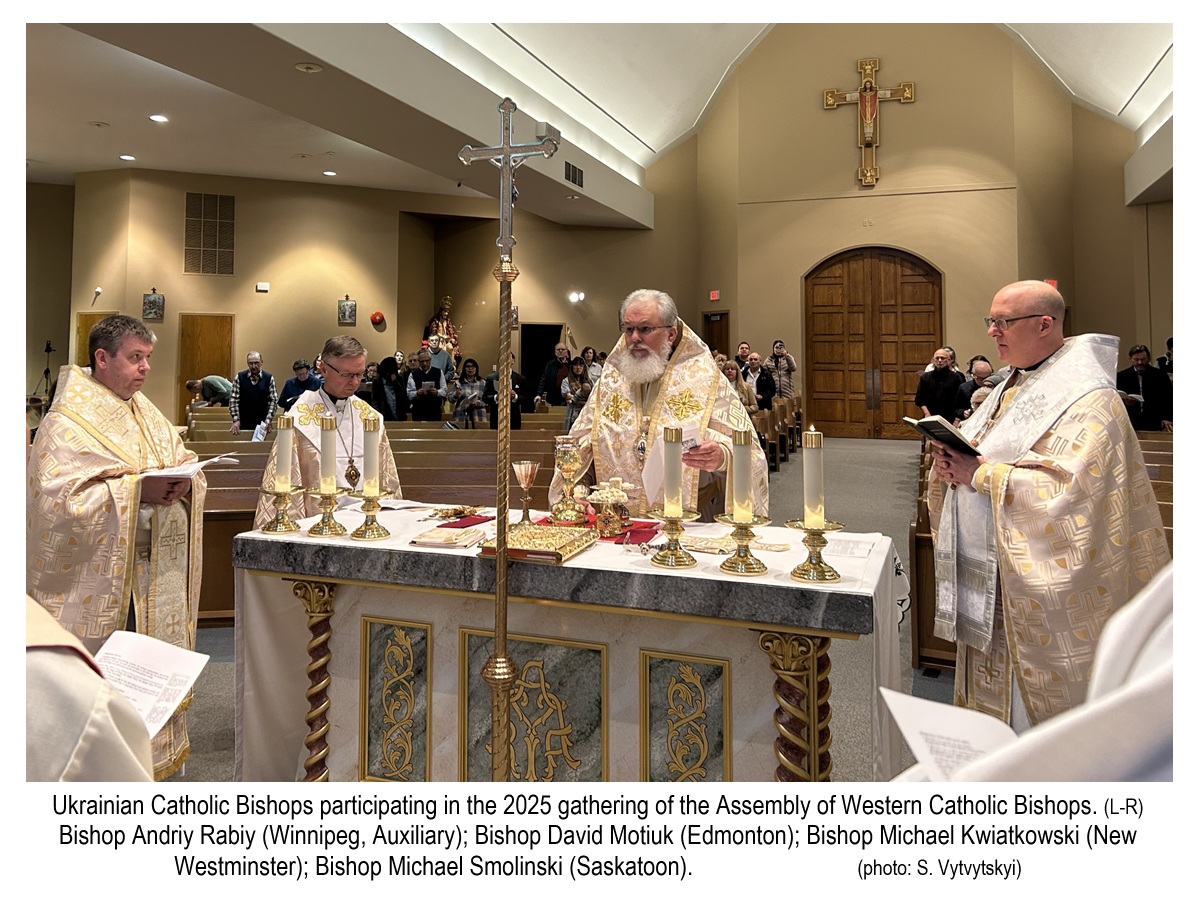
Canada has a national body of Catholic Bishops known as the CCCB - Canadian Conference of Catholic Bishops. However, the country was also divided into four regions so that the Church could better deal with local pastoral issues and needs in a certain area of our vast country. The AWCB - the Assembly of Western Catholic Bishops was established in 1974 to serve as a gathering for all Catholic bishops – eastern and western – from across Canada’s western provinces and the Yukon and Northwest Territories. By actual territory designation, it includes 22 eparchies and dioceses. Although there are other Eastern Catholic Bishops who have parishes in Western Canada (e.g. Chaldean, Melkite, Syro-Malabar, etc.), for the most part, it has been the Ukrainian Catholic hierarchy that participates regularly in the gatherings and activity of the AWCB. Ukrainian Catholic Bishop David Motiuk of Edmonton, has even served as the President of the Assembly. The present Ukrainian Catholic Bishops serving as active members of the AWCB are Metropolitan Lawrence Huculak (Winnipeg), Bishop David Motiuk (Edmonton), Bishop Michael Kwiatkowski (New Westminster), Bishop Michael Smolinski (Saskatoon) and Bishop Andriy Rabiy (Winnipeg).
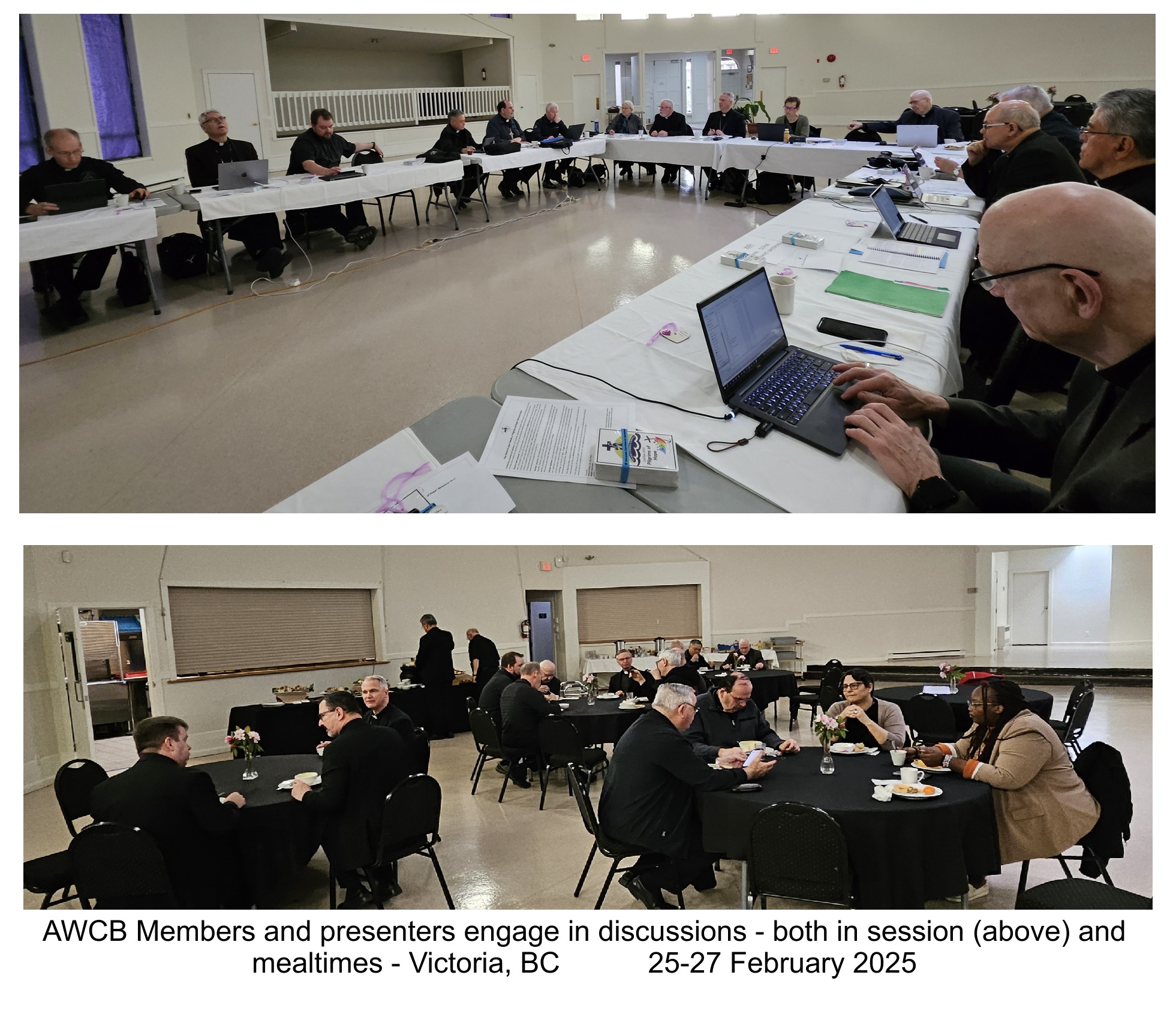
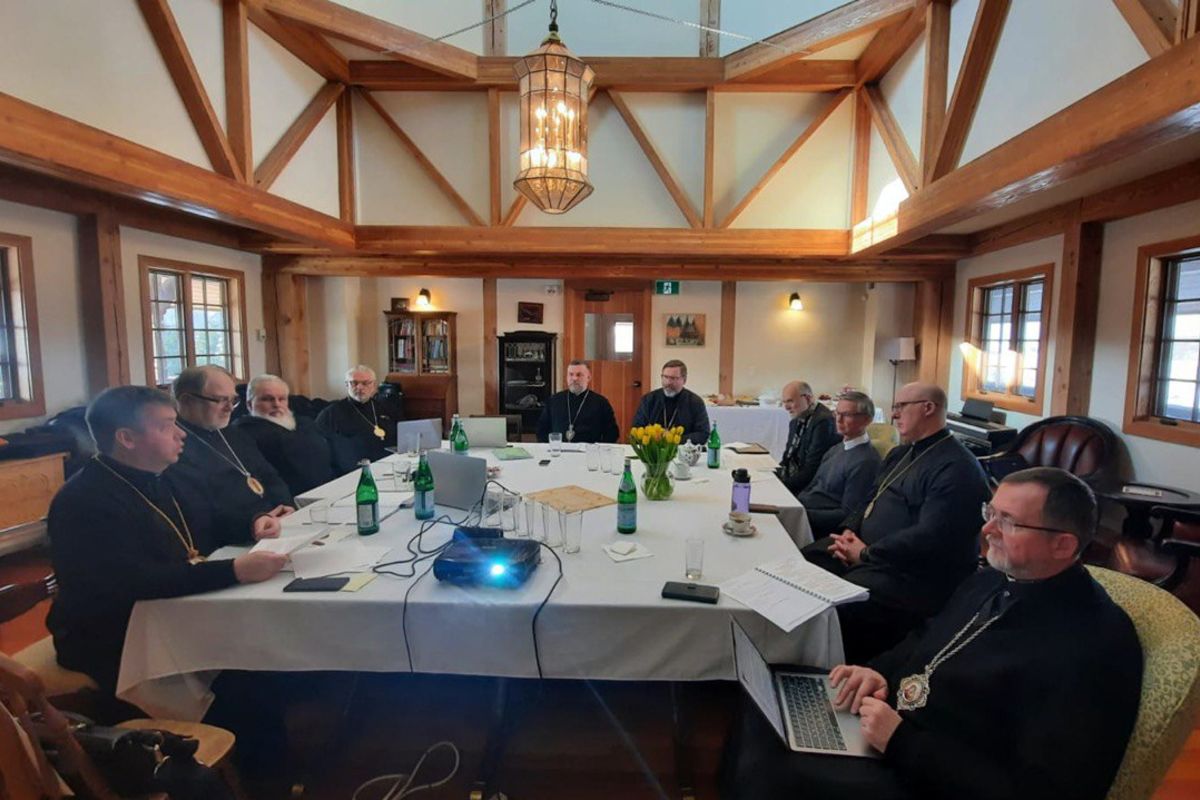
The AWCB’s 2025 annual gathering took place in the Saanich municipality of the Greater Victoria area on Vancouver Island from 25-27 February. A unique aspect of this year’s gathering was that, although the bishops spent the nights nearby, all the prayer services and the sessions and most of the meals occurred at Our Lady of Fatima Parish. In fact, the parishioners were invited to attend the daily Eucharistic Liturgies, which added a great spirit to the services. The Ukrainian Catholic bishops were asked to lead some of the services. Bishop Andriy Rabiy from Winnipeg lead the First Hour on the second day, Bishop Michael Kwiatkowski lead the Divine Liturgy on the third day. Of course, the other bishops concelebrated.
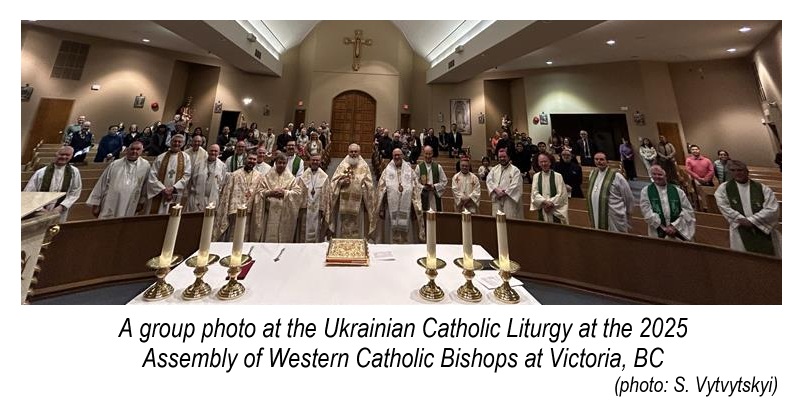
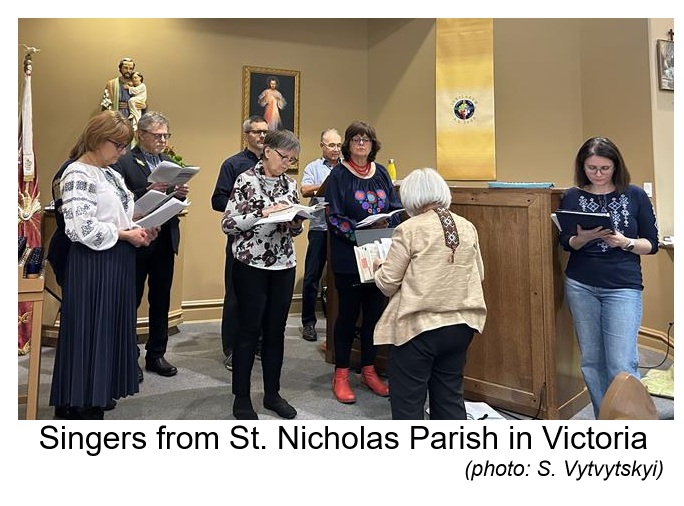
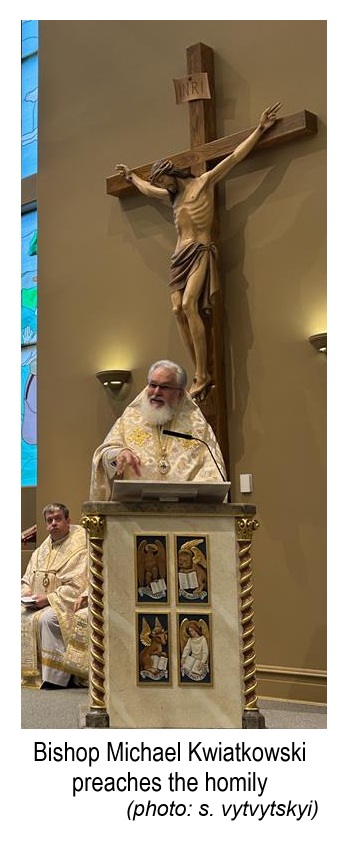
The Ukrainian Catholic Byzantine Divine Liturgy was truly a highlight of the gathering. Besides the four Ukrainian Bishops, two of our Island priests helped arrange everything and even brought some of their faithful to join and help with the responses. Father Yuriy Vyshnevskyy (St. Nicholas, Victoria) and Father Stepan Vytvytskyi (St. Michael, Nanaimo) and their parishioners really brought the Liturgy alive for a church full of people - many who did not have that much experience with the Byzantine Liturgy. The choir from Victoria really raised the souls of all present. During the homily, Bishop Michael touched upon the Jubilee Year, the work of the bishops during the assembly and a request for prayer for the bishops, for an end to the war in Ukraine and for our own personal conversion and renewal.
The AWCB three-day conference dealt with a variety of topics that included everything from catechism, clergy formation, insurance, Evangelization, MAiD, and reconciliation and collaboration with our indigenous peoples to Catholic education, vocations, religious movements, ecumenical outreach and social communications and media (as well as several other topics).
Please pray for your Bishops. As Bishop Michael said in his homily, “if you could be present for the sessions of the assembly of bishops, I know you would be inspired by the way the bishops truly love the Lord, love the Church and are focused on the spiritual and pastoral wellbeing of the God’s People and seek the best ways to serve their people in spite of challenges and even very complicated situations!”
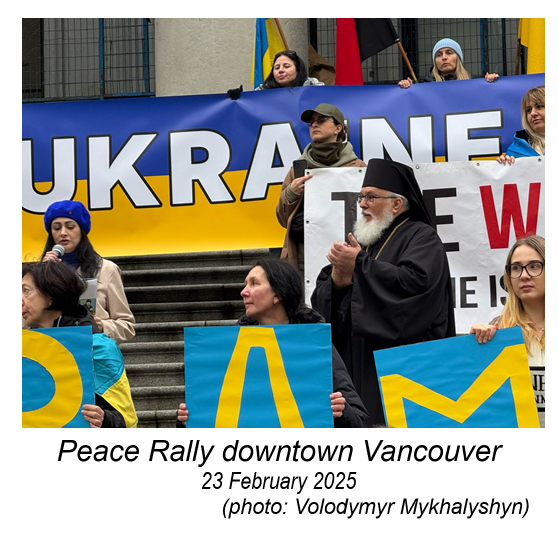
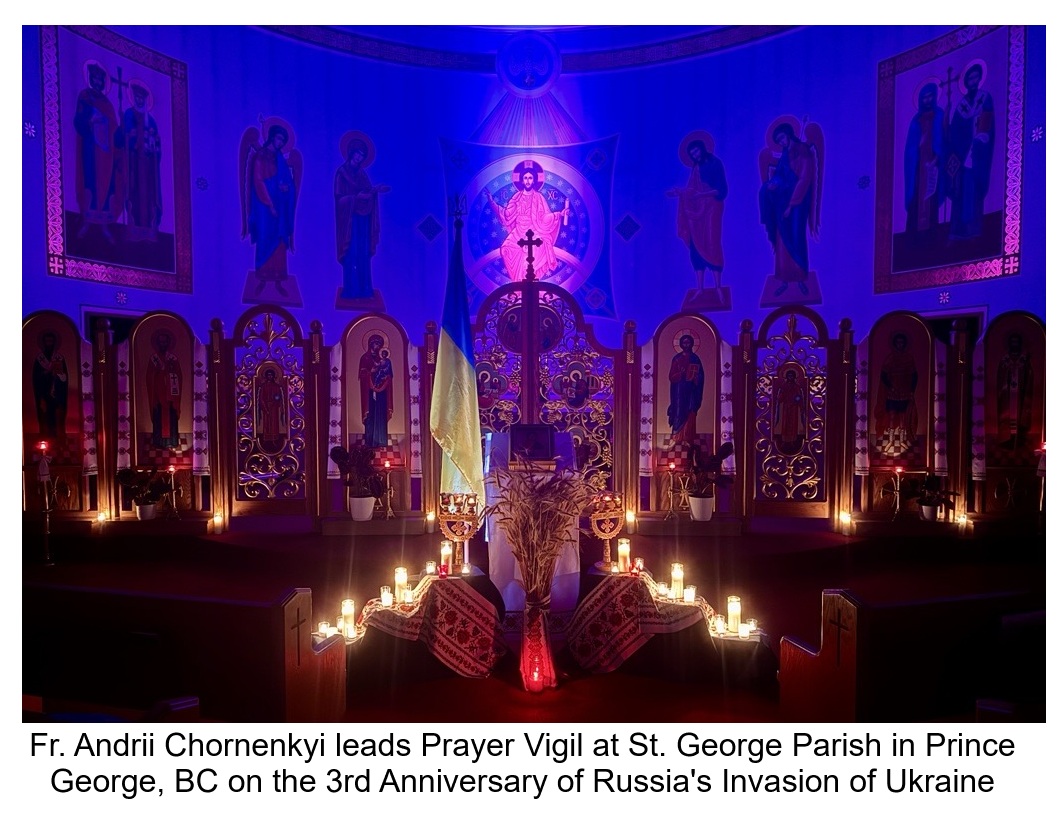
The Eparchy of New Westminster prays daily for Ukraine. We pray daily for an end to the brutal war brought across the borders by Russia some eleven years ago and intensified horrifically three years ago with the full-scale invasion. On Sunday the 23rd of February, parishes and communities throughout the Eparchy focused the prayer for peace. Aside from prayers during the Eucharistic Liturgies, many offered additional petitions, a panakhyda (requiem service) or even a program of focused prayer.
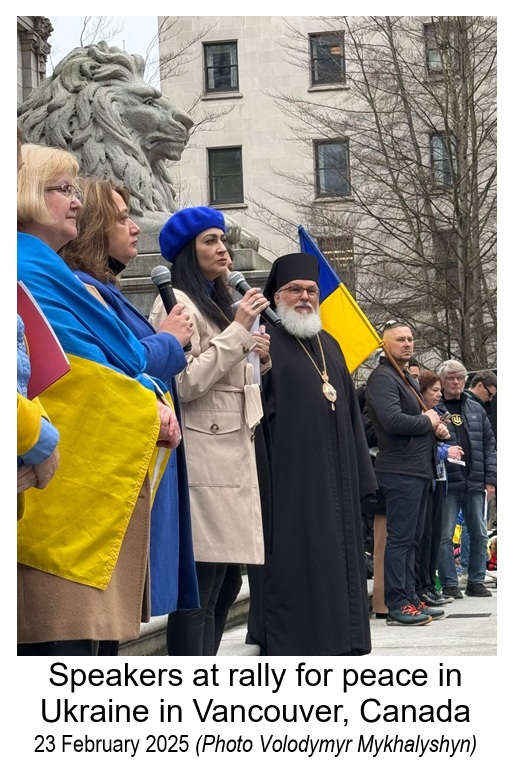
In several cities a public manifestation was held in the town square in which our parishioners and clergy prominently participated. In some cases, it was representatives of the Ukrainian Canadian Congress that spearheaded the organization of the rallies, but they invited all Ukrainian entities to join, including Ukrainian church communities. In Vancouver, Bishop Michael opened the event at the Art Gallery with a message and prayer. Other clergy and faithful were in attendance.
Later in the day, some parishes hosted vigils to which the wider community was invited. At Holy Eucharist Cathedral Bishop Michael led a well-attended vigil that began at 17:40 as that would correspond directly with the time in Ukraine (3:40 AM) when the first reports were being made about missile strikes and fighting between invading Russian troops and Ukrainian Armed Forces.
The evening began with Bishop Michael accenting that the gathering was not a rally, or a challenge directed toward the aggressor. It was a prayer vigil in which we gather in the presence of our Lord and humbly ask His mercy in ended the war and restoring peace so the people of Ukraine could continue to live their lives in peace to work out their salvation in fear and trembling (Philippians 2:12).
The evening began with a Moleben’ to the Mother of God served by the Bishop and other clergy. Responses were led by the Cathedral choir under the direction of Halyna Bybyk. Within moments of the last Amen, the warning sirens that people in Ukraine hear daily, pierced the tranquility and people were urged to move to the basement “bomb shelter”.
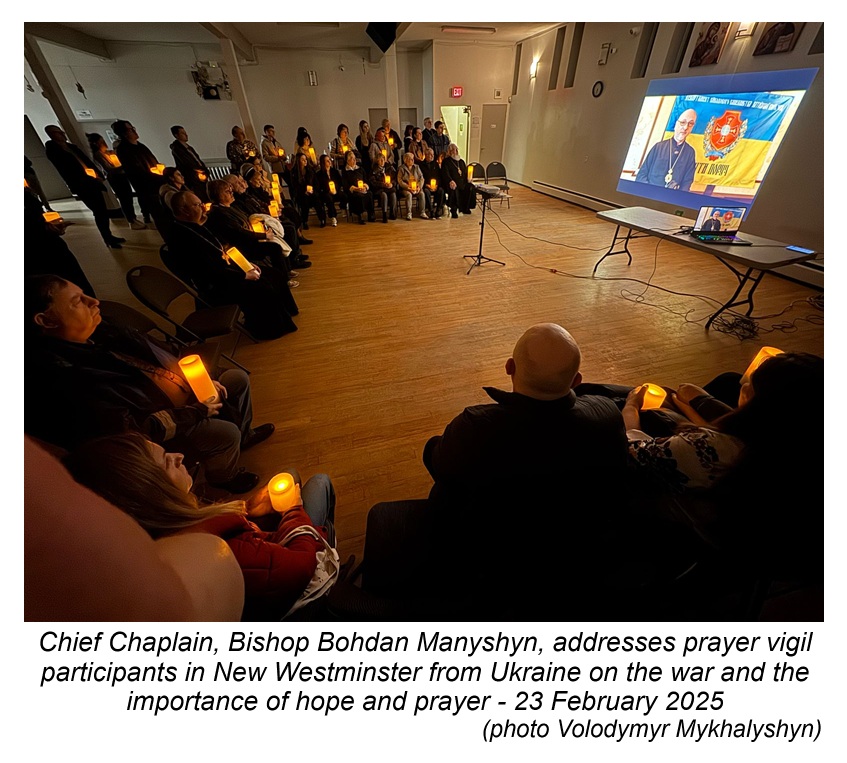
In the basement, Volodymyr Mykhalyshyn facilitated a program that included several moments of meditation. Bishop Bohdan Manyshyn, the head of the Department of Military Chaplaincy of the Ukrainian Catholic Church, spoke to the gathering, telling us about the situation of the war in Ukraine, but especially of how the Church brings hope and comfort to the soldiers on the front, and to the millions who are traumatized throughout the country. This was followed by a review of photos and images of the people in Ukraine accompanied by the violin music of Maryna Popova.
The people made their way back to the church and prayed a panakhyda for the countless victims of the war. Father Dr. Yuriy Sakvuk spoke at the conclusion. The night was not yet over. The youth offered to lead those who wanted to stay in a variety of songs - mainly from the Taizé community.
Let us continue to pray daily for an end to the war in Ukraine with a just and God-willed outcome!
22 лютого 2025 року у м. Торонто розпочалися засідання Постійного Синоду Української Греко-Католицької Церкви.
Цього разу участь у засіданнях Постійного Синоду беруть участь єпископи-члени: владика Борис Ґудзяк, архиєпископ і митрополит Філадельфійський зі США, владика Володимир Ющак, єпископ Вроцлавсько-Кошалінський з Польщі, владика Йосафат Мощич, єпископ Чернівецький з України та владика Богдан Дзюрах, апостольський екзарх для українців візантійського обряду у Німеччині та Скандинавії. Головує під час засідань Блаженніший Святослав, Отець і Глава Української Греко-Католицької Церкви, а обов’язки секретаря здійснює владика Андрій Хім’як, єпископ-помічник Київської архиєпархії.
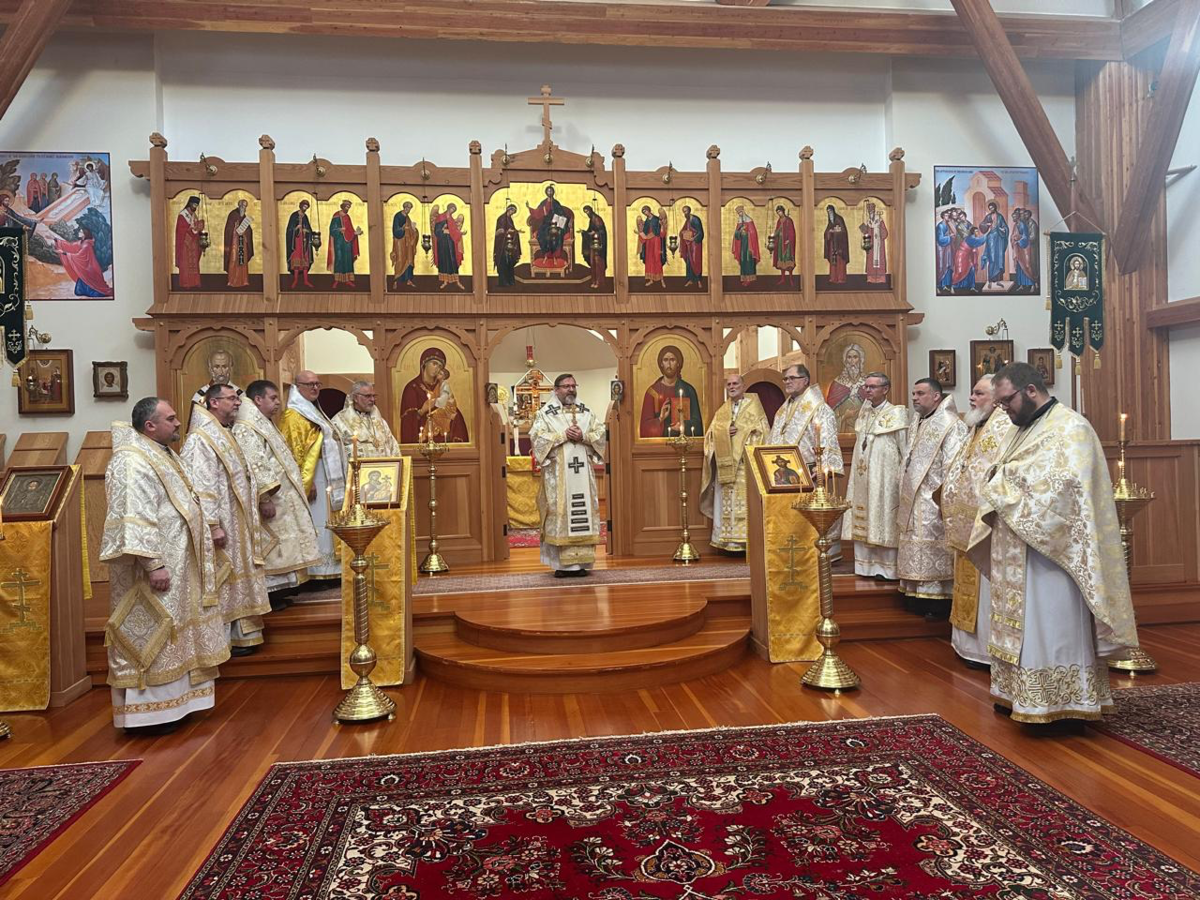
Традиційно, розпочався робочий день Архиєрейською Божественною Літургією на парафії Святого пророка Іллі у Бремптоні.
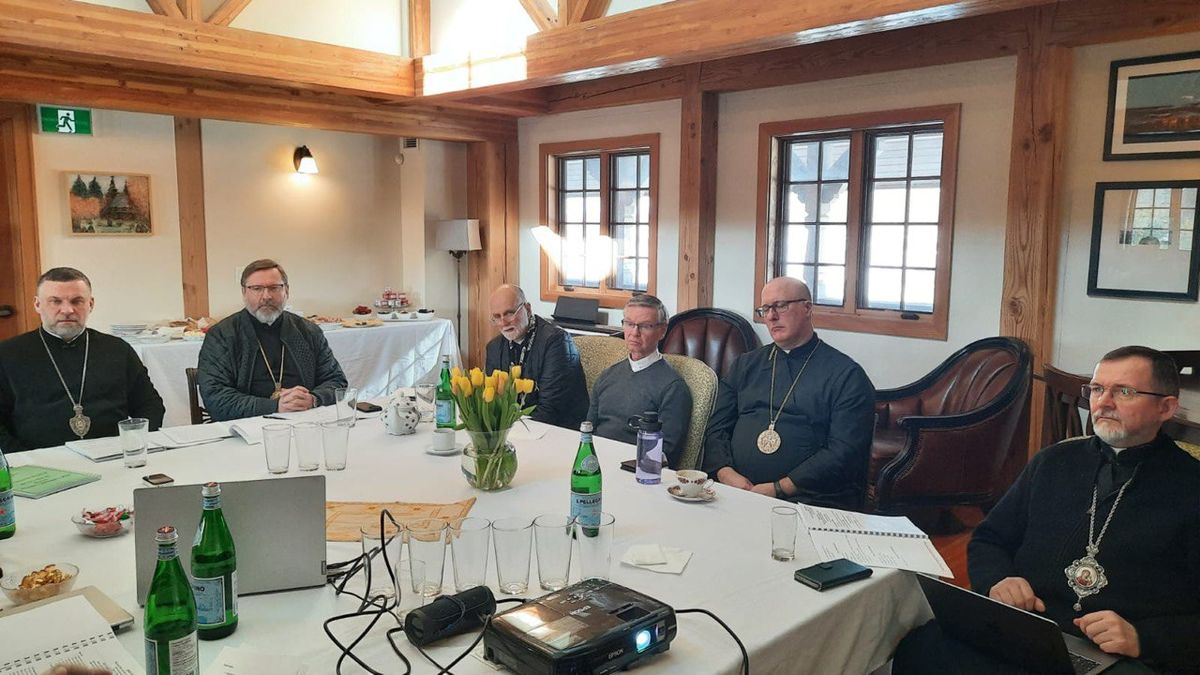
Два робочих засідання 11 (82) сесії Постійного Синоду у суботу були позначені зустріччю з українськими католицькими єпископами, що здійснюють своє служіння у Канаді. За словами владики Андрія Хім’яка, секретаря Постійного Синоду УГКЦ, така зустріч стала «нагодою творення спільноти і свідченням єдності глобальної УГКЦ».
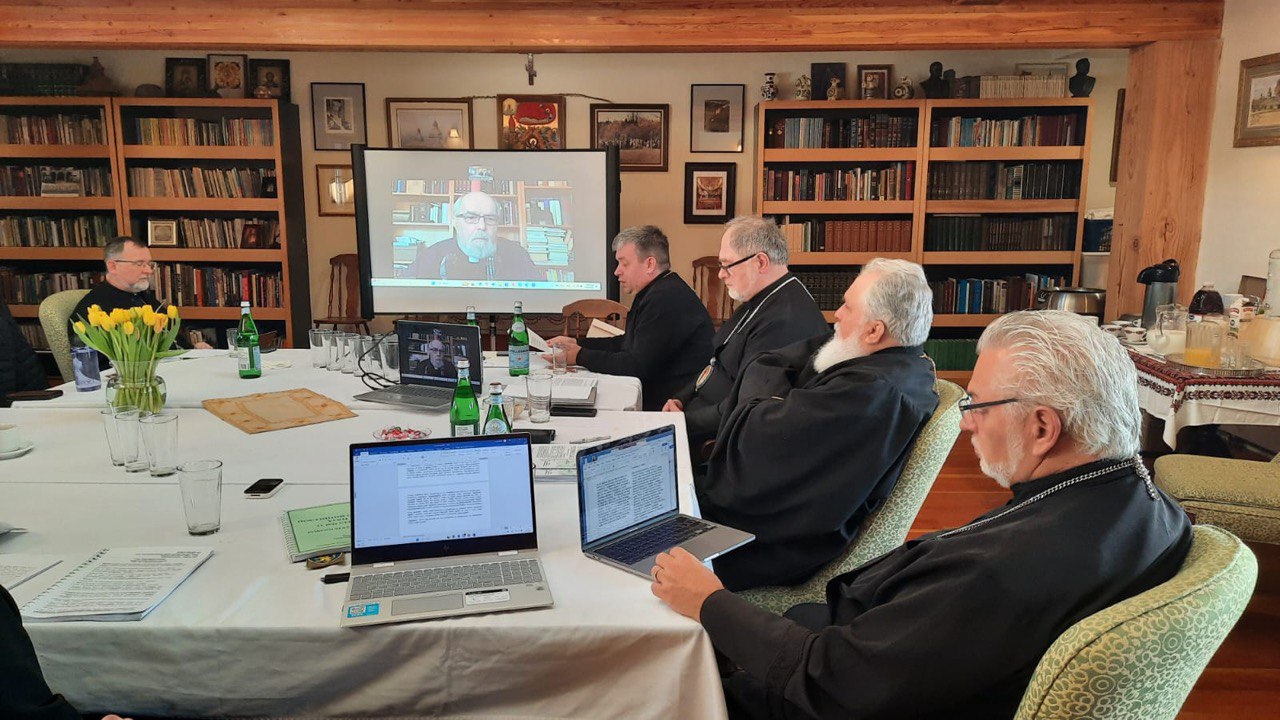
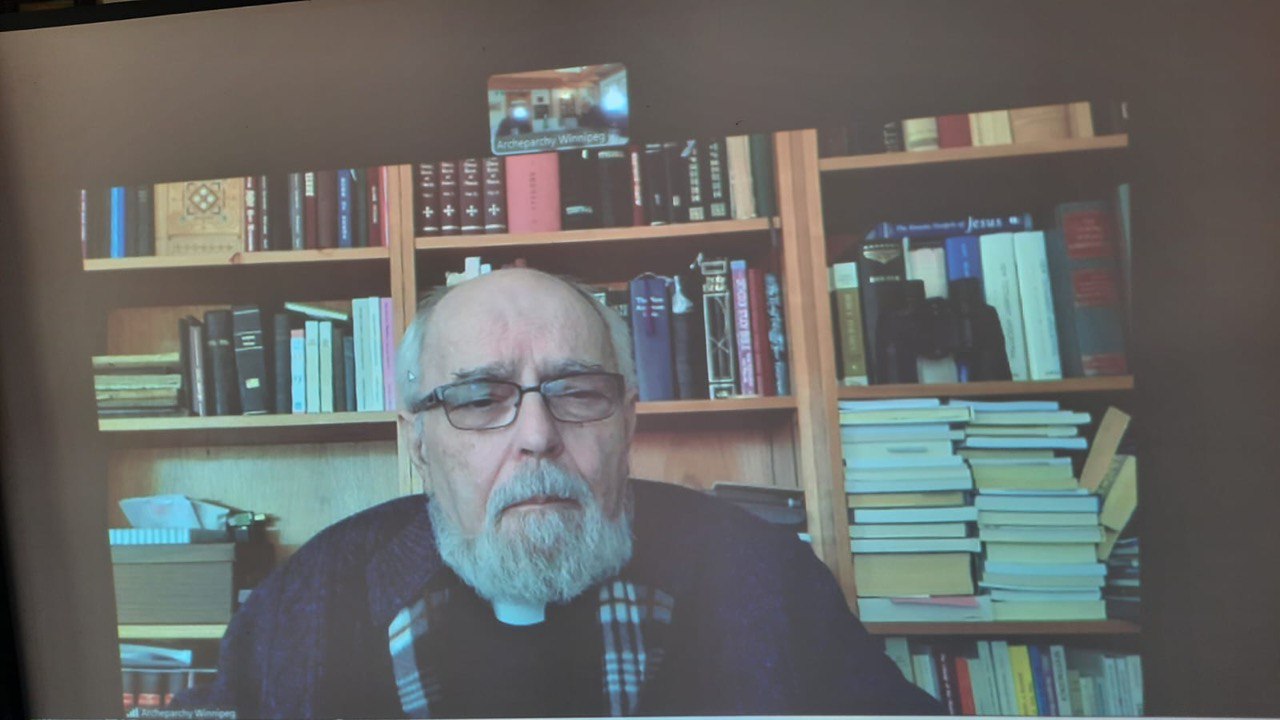
Серед прибулих на зустріч єпископів з Канади були владика Браян Байда, єпископ Єпархії Торонто та Східної Канади, владика Давид Мотюк, єпископ Едмонтонської єпархії, владика Михайло Кв’ятковський, єпископ Нью-Вестмінстерської єпархії, владика Михайло Смолінський, єпископ Саскатунської єпархії, та владика Андрій Рабій, єпископ-помічник Вінніпезької архиєпархії. Архиєпископ і митрополит Вінніпезький Лаврентій Гуцуляк долучився до зустрічі за допомогою онлайн-зв’язку.
Під час зустрічі єпископи з Канади повідомили про душпастирську ситуацію у Вінніпезькій митрополії.
За їхніми словами, відповідно до державних статистичних даних, після 24 лютого 2022 року до Канади прибуло близько 300 тис. українців. Більшість з них зосереджена в єпархії Торонто і Східної Канади. «Українська Католицька Церква в Канаді у різний спосіб намагається послужити новоприбулим українцям та інтегрувати їх у парафіяльні спільноти. Водночас творяться нові спільноти там, де є зосереджені українці, але немає близько наших парафій. Часто це відбувається через оренду римо-католицьких храмів», — зазначили єпископи.
Тож канадські єпископи відзначили потребу в нових активних священниках з місіонерським духом.
Владики також поділилися своїм досвідом реалізації душпастирського плану Української Греко-Католицької Церкви в своїх єпархіях та відповіддю на Синодальний шлях у Католицькій Церкві. Окремо було представлено і стан монашества в митрополії, зокрема обговорили служіння отців Чину Святого Василія Великого і Згромадження Найсвятішого Ізбавителя (редемптористів), сестер служебниць Непорочної Діви Марії і сестер Згромадження Святого Йосифа. Не оминули своєю увагою і діяльність духовної семінарії в м. Едмонтоні.
На завершення спільної зустрічі з членами Постійного Синоду владики Вінніпезької митрополії висловили вдячність Блаженнішому Святославові та єпископам Постійного Синоду за увагу та візит до Канади.
«Церква-Мати через візит Постійного Синоду показує свою близькість до Вінніпезької митрополії, до єпископів, духовенства, монашества і мирян», — резюмував на завершення єпископ Андрій Хім’як.Пресслужба Секретаріату Синоду Єпископів УГКЦ
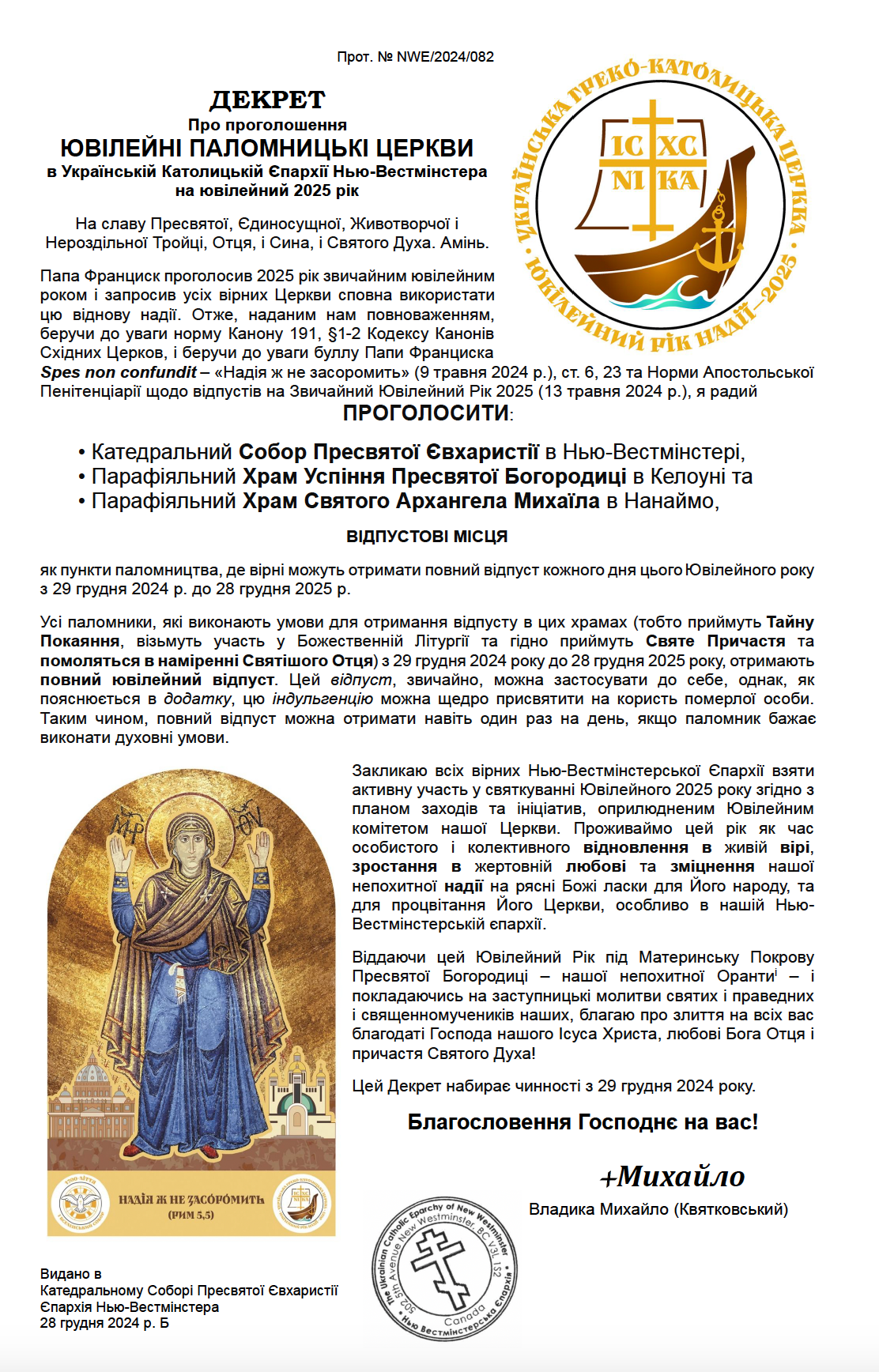
в Українській Католицькій Єпархії Нью-Вестмінстера на ювілейний 2025 рік
На славу Пресвятої, Єдиносущної, Животворчої і Нероздільної Тройці, Отця, і Сина, і Святого Духа. Амінь.
Папа Франциск проголосив 2025 рік звичайним ювілейнимроком і запросив усіх вірних Церкви сповна використатицю віднову надії. Отже, наданим нам повноваженням, беручи до уваги норму Канону 191, §1-2 Кодексу КанонівСхідних Церков, і беручи до уваги буллу Папи Франциска Spes non confundit – «Надія ж не засоромить» (9 травня 2024 р.), ст. 6, 23 та Норми Апостольської Пенітенціарії щодо відпустів на Звичайний Ювілейний Рік 2025 (13 травня 2024 р.), я радий
ПРОГОЛОСИТИ:
• Катедральний Собор Пресвятої Євхаристії в Нью-Вестмінстері,
• Парафіяльний Храм Успіння Пресвятої Богородиці в Келоуні та
• Парафіяльний Храм Святого Архангела Михаїла в Нанаймо,
ВІДПУСТОВІ МІСЦЯ
як пункти паломництва, де вірні можуть отримати повний відпуст кожного дня цього Ювілейного рокуз 29 грудня 2024 р. до 28 грудня 2025 р.
Recent Comments