Last 29 October marked the conclusion of the First Session of the XVI Ordinary General Assembly of the Synod of Bishops. This session allowed us to deepen our understanding of synodality as part of the Church’s fundamental vocation. “Synodality is mainly presented as a joint journey of the People of God and as a fruitful dialogue between the charisms and ministries at the service of the coming of the Kingdom” (Synthesis Report, Introduction).
Emphasizing the synodal dimension allows the Church to rediscover its itinerant nature, as the People of God journeying through history on pilgrimage, “migrating”, we could say, toward the Kingdom of Heaven (cf. Lumen Gentium, 49). The biblical narrative of Exodus, depicting the Israelites on their way to the promised land, naturally comes to mind: a long journey from slavery to freedom prefiguring the Church’s journey toward her final encounter with the Lord.
Likewise, it is possible to see in the migrants of our time, as in those of every age, a living image of God’s people on their way to the eternal homeland. Their journeys of hope remind us that “our citizenship is in heaven, and it is from there that we are expecting a Saviour, the Lord Jesus Christ” (Phil 3:20).
The images of the biblical exodus and of migrants share several similarities. Like the people of Israel in the time of Moses, migrants often flee from oppression, abuse, insecurity, discrimination, and lack of opportunities for development. Similar to the Jews in the desert, migrants encounter many obstacles in their path: they are tried by thirst and hunger; they are exhausted by toil and disease; they are tempted by despair.
Yet the fundamental reality of the Exodus, of every exodus, is that God precedes and accompanies his people and all his children in every time and place. God’s presence in the midst of the people is a certainty of salvation history: “The Lord your God goes with you; he will not fail you or forsake you” (Deut 31:6). For the people who came out of Egypt, this presence manifested itself in different forms: a pillar of cloud and fire showing and illuminating the way (cf. Ex 13:21), the meeting tent that protected the ark of the covenant, making God’s closeness tangible (cf. Ex 33:7), the pole with the bronze serpent assuring divine protection (cf. Nm 21:8-9), manna and water (cf. Ex 16-17) as God’s gifts to the hungry and thirsty people. The tent is a form of presence especially dear to the Lord. During David’s reign, God chose to dwell in a tent, not a temple, so that he could walk with his people, “from tent to tent and from dwelling to dwelling” (1 Chr 17:5).
Many migrants experience God as their traveling companion, guide and anchor of salvation. They entrust themselves to him before setting out and seek him in times of need. In him, they find consolation in moments of discouragement. Thanks to him, there are good Samaritans along the way. In prayer, they confide their hopes to him. How many Bibles, copies of the Gospels, prayer books and rosaries accompany migrants on their journeys across deserts, rivers, seas and the borders of every continent!
God not only walks with his people, but also within them, in the sense that he identifies himself with men and women on their journey through history, particularly with the least, the poor and the marginalized. In this we see an extension of the mystery of the Incarnation.
For this reason, the encounter with the migrant, as with every brother and sister in need, “is also an encounter with Christ. He himself said so. It is he who knocks on our door, hungry, thirsty, an outsider, naked, sick and imprisoned, asking to be met and assisted” (Homily, Mass with Participants in the “Free from Fear” Meeting, Sacrofano, 15 February 2019). The final judgment in Matthew 25 leaves no doubt: “I was a stranger and you welcomed me” (v. 35); and again “truly, I say to you, as you did it to one of the least of these brothers and sisters of mine, you did it to me” (v. 40). Every encounter along the way represents an opportunity to meet the Lord; it is an occasion charged with salvation, because Jesus is present in the sister or brother in need of our help. In this sense, the poor save us, because they enable us to encounter the face of the Lord (cf. Message for the Third World Day of the Poor, 17 November 2019).
Dear brothers and sisters, on this day dedicated to migrants and refugees, let us unite in prayer for all those who have had to leave their land in search of dignified living conditions. May we journey together with them, be “synodal” together, and entrust them, as well as the forthcoming Synod Assembly, “to the intercession of the Blessed Virgin Mary, a sign of sure hope and consolation to the faithful People of God as they continue their journey” (XVI Ordinary General Assembly Synthesis Report: Proceeding Along the Journey).
Prayer
God, Almighty Father, we are your pilgrim Church journeying towards the Kingdom of heaven. We live in our homeland, but as if we were foreigners. Every foreign place is our home, yet every native land is foreign to us. Though we live on earth, our true citizenship is in heaven. Do not let us become possessive of the portion of the world you have given us as a temporary home. Help us to keep walking, together with our migrant brothers and sisters, toward the eternal dwelling you have prepared for us. Open our eyes and our hearts so that every encounter with those in need becomes an encounter with Jesus, your Son and our Lord. Amen.
Rome, Saint John Lateran, 24 May 2024, Memorial of the Blessed Virgin Mary, Help of Christians
У понеділок, 3 червня 2024 р., у Ватикані відбулося представлення Послання Папи Франциска на 110-й Всесвітній день мігранта і біженця, який Церква відзначатиме 29 вересня 2024 року.
Дорогі браття й сестри!
29 жовтня 2023 року завершилася перша сесія XVI Звичайної загальної асамблеї Синоду Єпископів, яка дала нам змогу поглибити наше розуміння синодальності як первісного покликання Церкви. «Синодальність постає передусім як спільна мандрівка Божого люду та як плідний діалог харизм і служінь на службі приходові Божого Царства» (Підсумковий звіт, Вступ).
Наголос на синодальному вимірі дозволяє Церкві наново відкрити свою мандрівну природу як Божого люду, що подорожує історією, паломничаючи, можемо сказати, «мігруючи» до Небесного Царства (пор. Lumen gentium, 49). Спонтанно спадає на думку посилання на біблійну розповідь про Вихід, яка представляє ізраїльський народ в дорозі до обіцяної землі: довгий шлях від рабства до свободи, який є прообразом подорожі Церкви до остаточної зустрічі з Господом.
Подібним чином у мігрантах нашого часу, як і в мігрантах усіх часів, можемо побачити живий образ Божого люду, що прямує до вічної батьківщини. Їхні подорожі надії нагадують нам, що «наше громадянство в небі, звідки і Спасителя очікуємо, Господа Ісуса Христа» (Фил 3,20).
Ці два образи – біблійного виходу та мігрантів – мають багато спільного. Як і ізраїльський народ за часів Мойсея, мігранти часто втікають від ситуацій гноблення і зловживань, відсутності безпеки і дискримінації, браку перспектив розвитку. Як євреї в пустелі, мігранти зустрічають на своєму шляху багато перешкод: їх випробовують спрага і голод, їх виснажують труднощі і хвороби, їх спокушає відчай.
Але фундаментальна дійсність виходу, кожного виходу, полягає в тому, що Бог випереджає і супроводжує подорож свого люду і всіх своїх дітей усіх часів і на кожному місці. Божа присутність посеред народу є певністю історії спасіння: «Сам Господь, Бог твій, рушає з тобою; Він тебе не лишить і не покине» (Втор 31,6). Для народу, який вийшов з Єгипту, ця присутність проявляється в різних формах: хмарний і вогняний стовп показує і освітлює шлях (пор. Вих 13,21); намет зборів, який зберігає ковчег завіту, робить Божу близькість відчутною (пор. Вих 33,7); жезл з мідяною змією забезпечує божественний захист (пор. Чис 21,8-9); манна і вода (пор. Вих 16-17) є Божими дарами для голодного і спраглого народу. Намет є особливо дорогою для Господа формою присутності. Під час царювання Давида Бог відмовляється зачинитися в храмі, щоб і надалі перебувати в наметі і таким чином мати можливість ходити зі своїм народом «з намету до намету, з житла до житла» (1 Хр 17,5).
Чимало мігрантів переживають досвід Бога як свого супутника в дорозі, провідника і якоря спасіння. Вони ввіряють себе Йому перед від'їздом і вдаються до Нього у скрутних ситуаціях. У Ньому вони шукають розради в моменти розпачу. Завдяки Йому на дорозі зустрічаються добрі самаряни. Йому вони в молитві довіряють свої сподівання. Як же багато Біблій, Євангелій, молитовників і вервиць супроводжують мігрантів у їхніх подорожах через пустелі, річки і моря, через кордони всіх континентів!
Бог не лише іде зі своїм народом, але й у своєму народі, в тому значенні, що Він ототожнює Себе з людьми, що перебувають у дорозі через історію, особливо з найостаннішими, вбогими, марґіналізованими, немовби далі продовжуючи таїнство Втілення.
Ось чому зустріч з мігрантом, як і з кожним братом і сестрою в потребі, «є також зустріччю з Христом. Він сам нам це сказав. Це Він стукає в наші двері голодний, спраглий, чужинець, нагий, хворий, ув'язнений, просячи, щоб Його зустріли і допомогли» (Проповідь під час Святої Меси з учасниками зустрічі “Вільні від страху”, Сакрофано, 15 лютого 2019 р.). Останній суд, про який розповідає Матей у 25-му розділі своєї Євангелії, не залишає жодних сумнівів: «Я був чужинцем, і ви Мене прийняли» (в. 35); і ще раз: «Істинно кажу вам: усе, що ви зробили одному з моїх братів найменших, ви Мені зробили» (в. 40). Отже, кожна зустріч на нашій дорозі – це нагода зустріти Господа; і це нагода, наповнена спасінням, тому що в сестрі чи братові, які потребують нашої допомоги, присутній Ісус. У цьому сенсі бідні спасають нас, бо дають нам змогу зустріти Господнє обличчя (пор. Послання на Третій Всесвітній день бідних, 17 листопада 2019 р.).
Дорогі браття й сестри, у цей День, присвячений мігрантам і біженцям, єднаймося в молитві за всіх тих, хто був змушений покинути свою землю в пошуках гідних умов життя. Почуваймося в дорозі разом з ними, разом звершуймо «синод» і ввіряймо їх усіх, як і наступну синодальну асамблею, «заступництву Пресвятої Богородиці, знаку певної надії та розради в дорозі вірного Божого люду» (Підсумковий звіт, Щоб подорож тривала).
Молитва
Боже, Отче всемогутній, Ми – Твоя Церква-паломниця, що прямує до Небесного Царства. Ми живемо в себе на батьківщині, але немов чужинці. Кожен чужоземний регіон – наша батьківщина, як і кожна батьківщина для нас – чужинницька земля. Ми живемо на землі, але наше громадянство – у небі. Не дозволь, що ми ставали панами цієї частки світу, яку Ти дарував нам як тимчасове житло. Допоможи нам ніколи не припиняти подорож, разом з нашими братами й сестрами мігрантами, до вічного житла, яке Ти приготував для нас. Відкрий наші очі та наше серце, щоби кожна зустріч із потребуючим ставала зустріччю з Ісусом, Твоїм Сином і нашим Господом. Амінь.
Рим, базиліка Святого Івана на Латерані, 24 травня 2024, Пречистої Діви Марії, Помічниці християн.
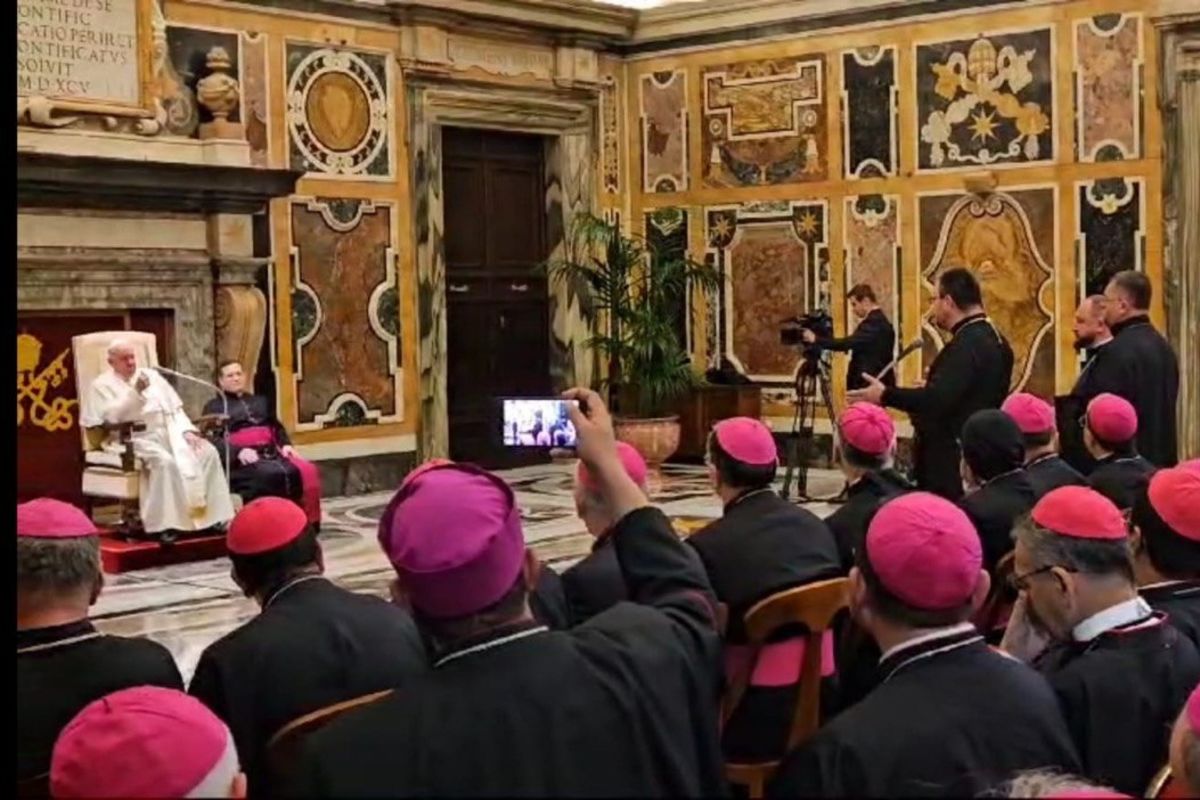
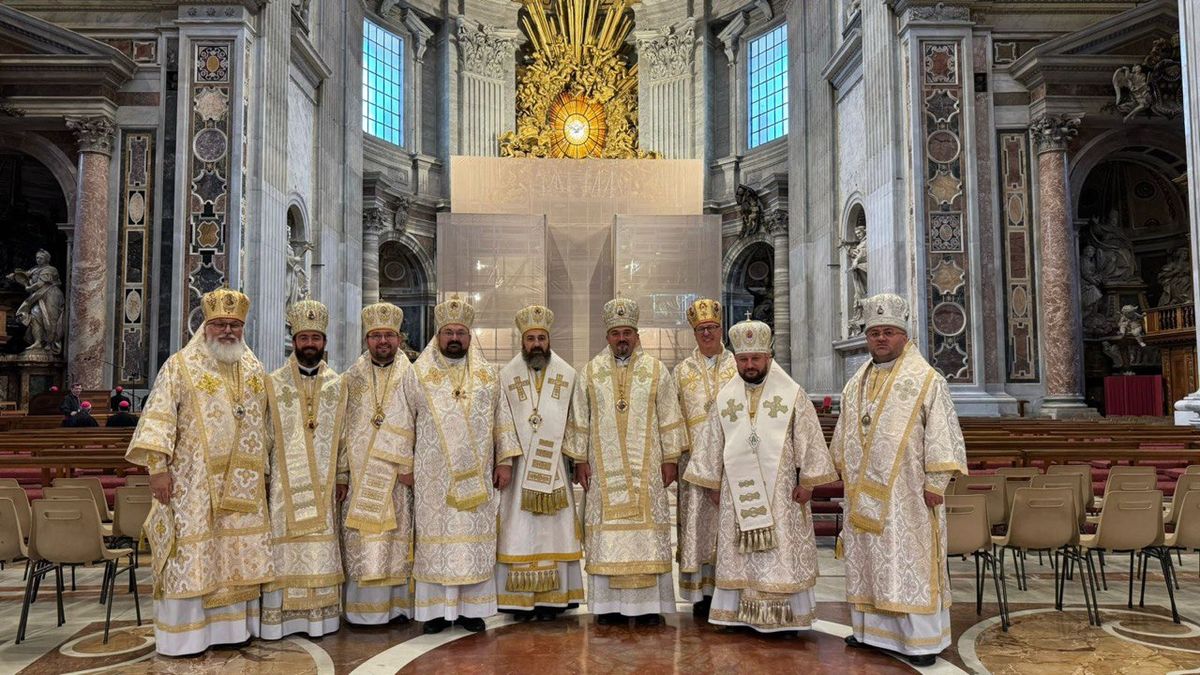
Перебуваючи на формаційному курсі для молодих єпископів у Ватикані, під час традиційної зустрічі із Намісником апостола Петра 19 вересня 2024 року семеро владик з України та двоє владик з Канади звернулися до Папи Франциска із коротким словом.
«Я — єпископ Максим Рябуха, який прибув з України, з Донецька. Зі мною присутні шість нових єпископів з України та двоє єпископів з Канади», — такими словами розпочав своє звернення до Святішого Отця Папи Франциска від імені українських ієрархів владика Максим Рябуха.
Перш за все, єпископ висловив вдячність за число присутніх владик з Української Греко-Католицької Церкви. «Прагнемо подякувати за те, що нас сьогодні тут так багато. Це — знак надії, який Церква дарує у ці настільки важкі роки. Наш народ його відчуває і сприймає. І також дякую за цей знак життя. Адже, будучи молодими, ми перебуваємо між людьми, не маючи перешкод чи труднощів у спілкуванні. До прикладу, цього року мені прийшлося проїхати близько 100 тис. км доріг, щоб віднайти і відвідати людей, парафії, спільноти, усіх тих, чий голос сьогодні представляю», — мовив він.
«З іншої сторони, також і ми приносимо сюди свідчення життя», — продовжив своє слово єпископ-помічник з Донецька. «Ви багато говорите про Україну, за що сердечно дякуємо. Тому що Ви є одним із небагатьох голосів, до якого дослухається міжнародна спільнота. Дякую за усі Ваші старання, які здійснюєте словесно, але також і за ті, які робите у тиші, зокрема зусилля щодо звільнення багатьох наших полонених. Серед останніх із них були двоє звільнених отців-редемптористів, які також особисто просили передати вам свої слова вдячності», — зазначив архиєрей.
За словами владики Максима, в Україні зараз дуже складна ситуація, але серед усіх життєвих драм Церква продовжує жити. «Зокрема я прибув із прифронтової території, і я не відчуваю, що люди сьогодні втрачають віру у Бога. Навпаки, багато шукають за Ним. Це момент, у якому багато людей ставлять питання сенсу, тож присутність віри і Церкви стає для них величезною підтримкою», — поділився своїм свідченням єпископ.
Далі українські єпископи піднесли Папі Франциску кілька дарунків. Першим із них стала ікона Зарваницької Божої Матері з відомого відпустового місця.
«Я — єпископ Теодор, що прибув з Мукачево. Це ікона, яку один із наших капеланів віднайшов у зруйнованій ракетним обстрілом хаті. І сьогодні ми привезли її сюди, у домівку усіх католиків», — представив дарунок владика Теодор Мацапула, єпископ Мукачівської греко-католицької єпархії.
«Додам лише одну річ: кожного разу, коли Ваша Святість закликає до молитви усю Католицьку Церкву, усі ми тут присутні відчуваємо величезну Божу допомогу у боротьбі зі злом», — мовив на завершення владика Максим Рябуха.
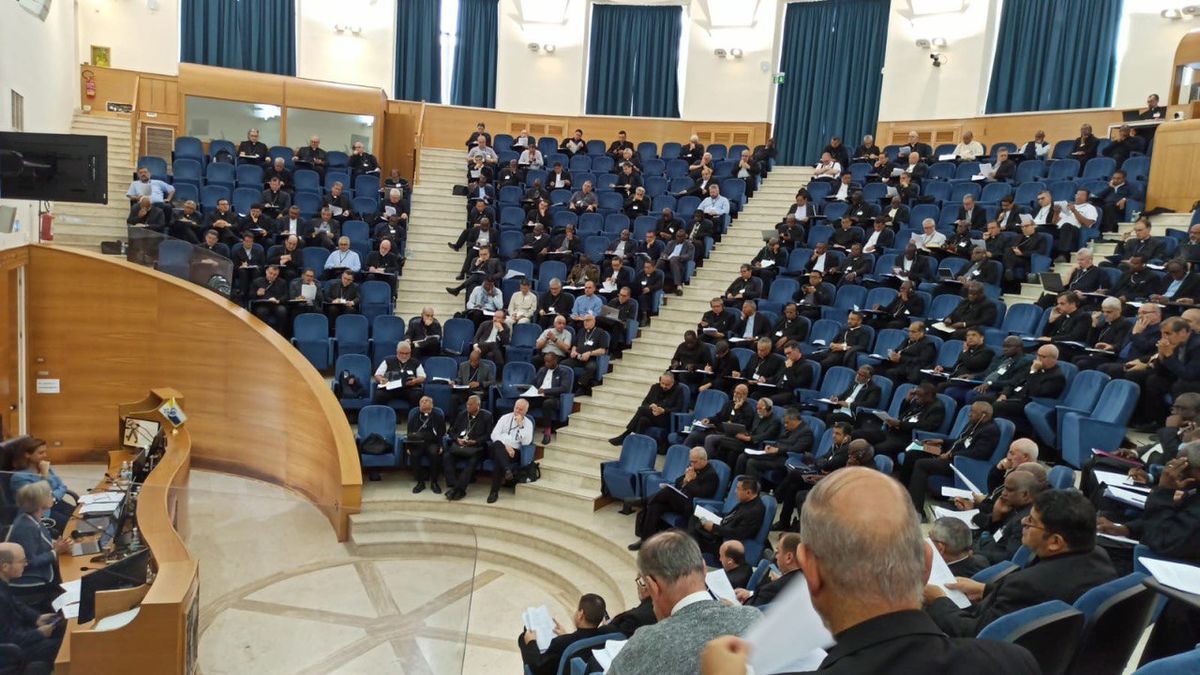
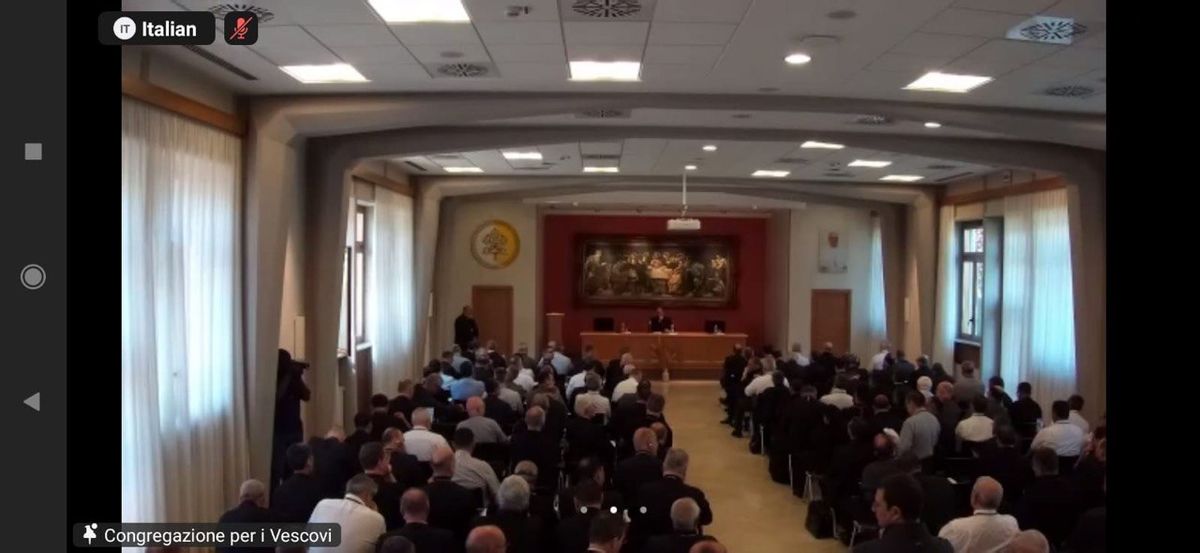
Нагадаємо, що 267 новопризначених єпископів, — майже всі висвячені минулого року, — з п’яти континентів зібралися в Римі, щоб від 15 до 22 вересня взяти участь у спеціальних навчальних курсах, запропонованих їм різними дикастеріями Святого Престолу. «Вереснева зустріч», яка вже стала традиційною в програмуванні діяльності Римської Курії, цього року набуває безпрецедентного значення: вперше значну частину робочих сесій в Папському університеті «Урбаніана» спільно переживають як єпископи, що беруть участь у курсі, організованому Дикастерією євангелізації (Секція першої євангелізації та нових партикулярних Церков), так і ті, що беруть участь в аналогічному навчальному курсі, організованому Дикастерією у справах єпископату.
Зокрема, в курсі, організованому Дикастерією євангелізації, беруть участь 114 єпископів, а в курсі, організованому Дикастерією у справах єпископів, — 153 учасники. Серед них також 25 єпископів східного обряду (до компетенції Дикастерії належать Східні Церкви) та 5 нововисвячених єпископів, які працюють у Римській Курії.
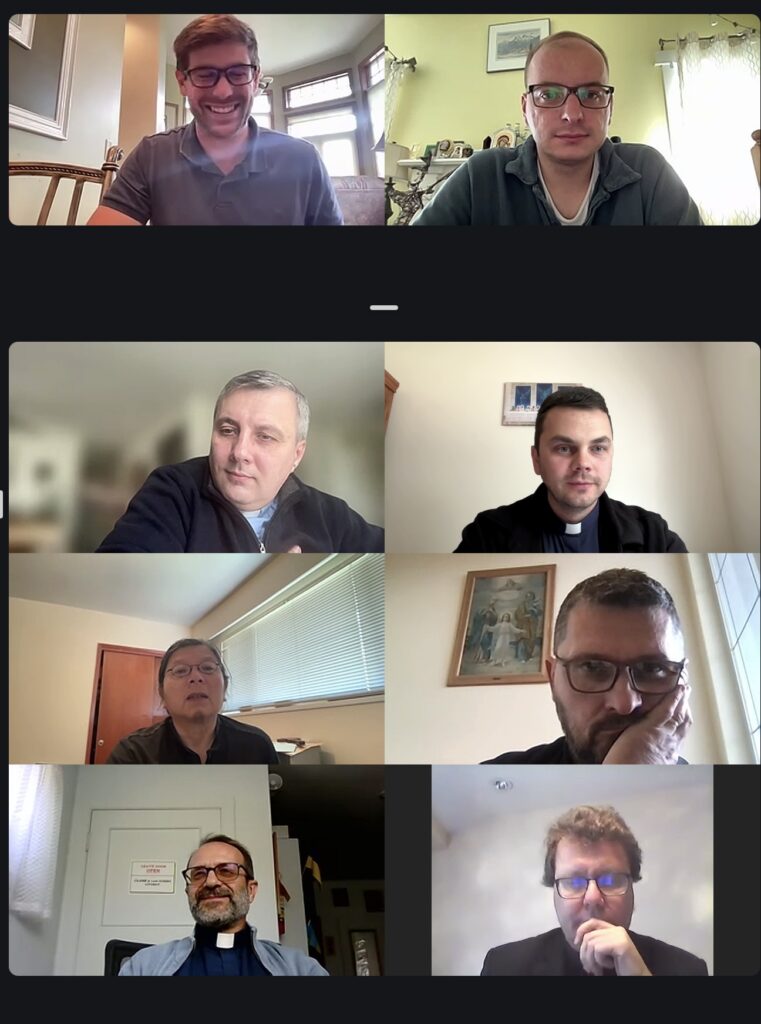
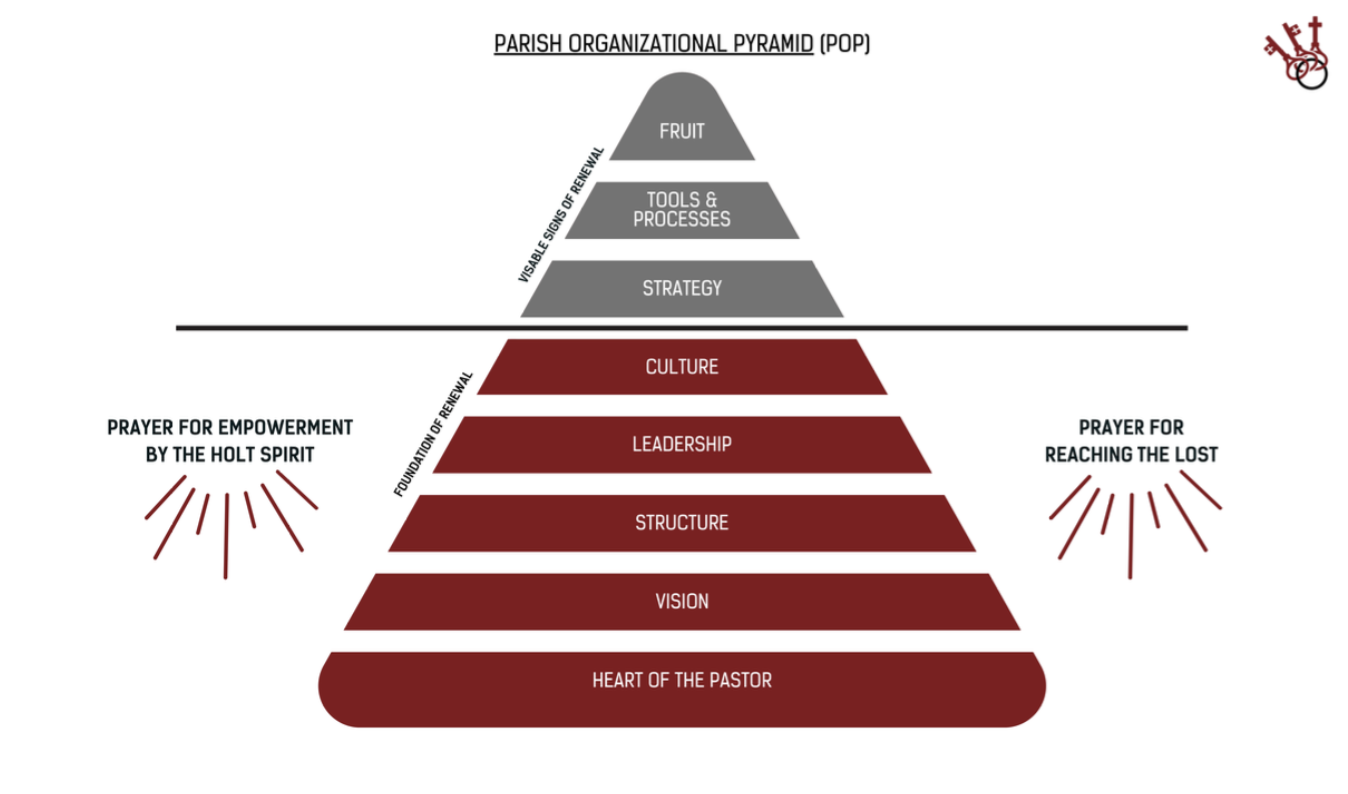
On September 18, the priests of the New Westminster Eparchy have begun training in the "Divine Renovation" program. A new training course for priests has recently begun, focusing on the critical topic of vision formation — a God-inspired picture of the future that drives and motivates. Throughout the course, priests are reminded that genuine vision comes from the heart, from inner passion that moves a person to action and inspires change.
What is Vision?
Vision is described as "a God-inspired picture of the future that produces passion." It is an internal drive, born from deep emotions, that defines what the Church should become. Priests are encouraged not to approach this mechanically — it’s not just about crafting strategies, but rather a spiritual experience that involves deep reflection and prayer.
The Vision Formation Process
The process begins with an internal reflection on what inspires and disturbs you. These emotions help priests determine the path their community should follow. Vision is about where we are taking people and why it matters, rather than what we simply do as a Church. The course teaches priests to focus not on what they want from people, but what they want for them, emphasizing their spiritual growth and well-being.
The Importance of Vision for the Community
Vision formation is a team effort, but it begins with the leader — the priest. A crucial part of the process is communicating this vision to the community. However, this does not mean a priest should immediately announce the vision to everyone. Instead, they should first start integrating it into homilies, discussing it with leaders, and gradually introducing the community to it. The vision becomes a shared goal that unites the community and helps everyone move forward in faith.
Spiritual Leadership and Mission
The course also stresses the difference between vision and mission. The Church’s mission is about what we do, while vision explains why we do it and where we are leading the community. The combination of love for people and healthy discontent about what needs improvement is what fuels action. Both are necessary for growth.
Priests undergoing this training have a unique opportunity to deepen their understanding of their role, shape a clear vision, and guide their communities toward spiritual growth and closer communion with God.
Радо представляю вам нову книгу з нашої серії «Молитовне читання Святого Письма» – «У школі Йоана» – і запрошую вирушити в цю духовну подорож, відкриваючи для себе нові аспекти віри і зміцнюючи свою любов до життєдайної мудрості Божого Слова.
Цей коментар до четвертого Євангелія збагатить ваше знання Святого Письма, і ви помітите, що Євангеліє від Йоана значно відрізняється від трьох інших синоптичних Євангелій. Тож ви зробите собі послугу, шукаючи паралельні тексти в усіх Євангеліях, щоб відкрити для себе та тих, хто читає з вами, ще повніше розуміння.
Євангеліє від Йоана – особливе, бо відкриває нам власне особу Ісуса Христа – Сина Божого, який став людиною задля спасіння всього людства. Воно вже з перших величних слів «Споконвіку було Слово» закликає нас до роздумів над таїнством Божественного Слова, яке стало тілом і оселилося між нами.
Це Євангеліє впроваджує нас у світ знаків-чудес, що виявляють Божу силу і любов до людей, закликаючи кожного з нас до віри, яка змінює життя. Щоб і ми могли досвідчити Божу любов у своєму житті, Євангелист Йоан – учень, «що його любив Ісус», – ділиться з нами своїм глибоким особистим досвідом наймолодшого з апостолів, який ніколи не припиняв зростати у вірі та любові до Бога, аж поки останнім із Дванадцятьох не завершив це паломницьке життя.
Молитовне читання Євангелія від Йоана – це не просто вивчення тексту, а шлях до зустрічі з живим Христом. Нехай це молитовне читання стане джерелом благодаті для кожного з нас, наповнюючи наші серця миром, радістю і надією у Христі!
Я переконаний, якщо ви знайдете час і приділите його для вивчення живого Слова Божого, ви побачите, як кожна мить, включно з вашим життям, пов’язана з усією історією спасіння, і це буде досвід, більш захопливий і приємний, аніж прочитання будь-якого повного таємниць роману або пригодницького трилеру. Насолоджуйтесь!
Хай Господь рясно благословить вас на цьому шляху!
Владика Михайло Квятковський, голова Патріаршої катехитичної комісії УГКЦ
Довідка: молитовне читання Євангелія від Йоана – це продовження програми молитовного читання Святого Письма, яку Патріарша катехитична комісія підготувала на прохання Синоду єпископів УГКЦ.
Тексти Євангелія з коментарем з книги Фаусті Сільвано і Канелла Вінченцо “У школі Йоана” будемо публікувати щовівторка тут, на сайті Патріаршої катехитичної комісії.
Ознайомитися з усіма матеріалами щодо організації молитовного читання можна за цим посиланням:

Recent Comments